Cycling to Heřmánky Nad Odru📍
I wanted to visit Silesia for a loooong time, as part of my family origins lie there and the stories about the beautiful landscape and rich culture have long captivated me. In October I had 20 days off from work and set out for an autumn adventure. My goal was simple: reach my grandma’s birthplace in Heřmánky 281 by bike 1, visit the best of Czech Republic along the way, and end my trip in Poland. This journey led me through fairytale forests, across the rolling hills of Moravia and over the Fichtel Mountains.
Into the Heart of Franconia
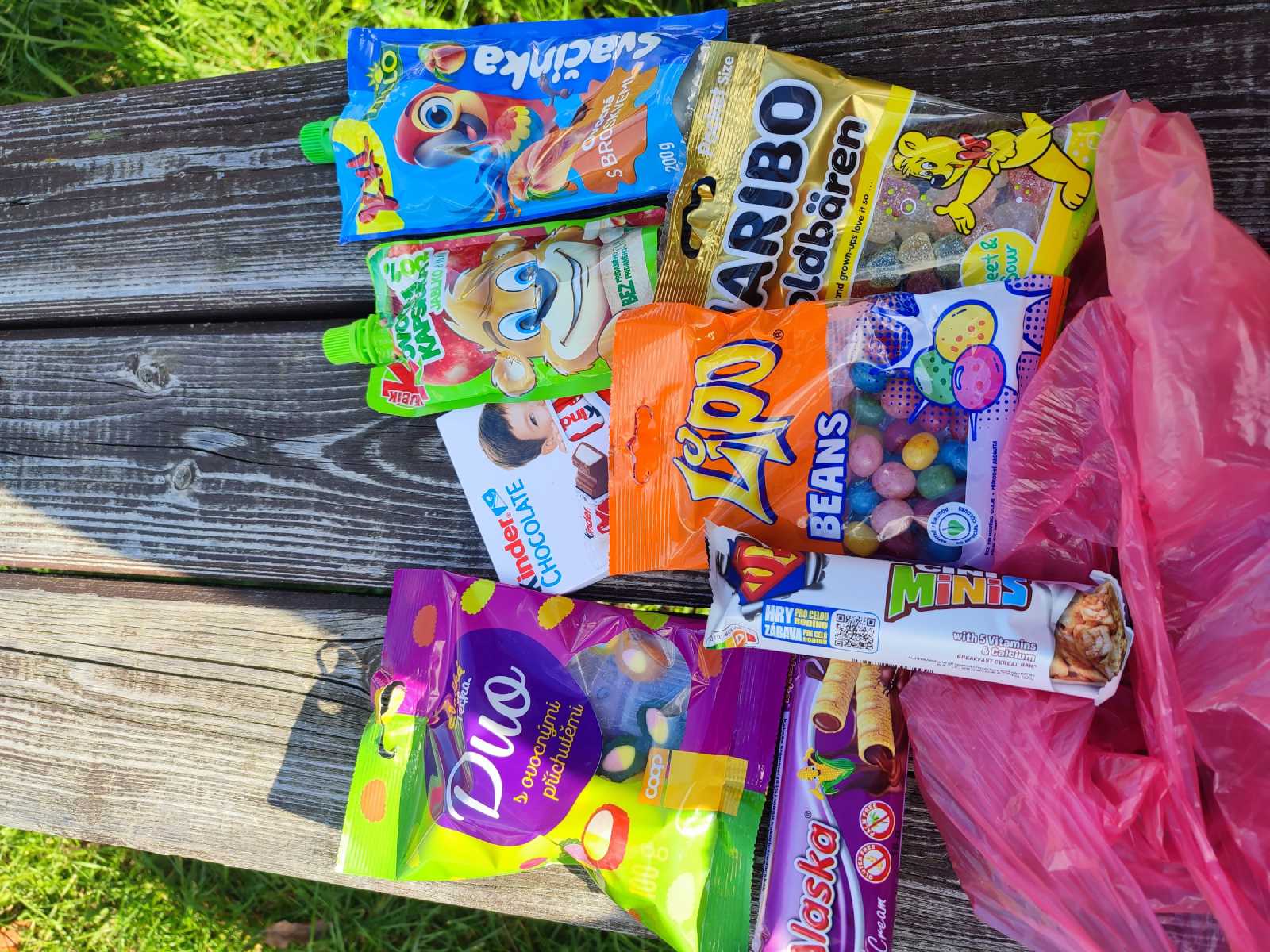
The first day took me through the Swabian hills from Karlsruhe toward Schwäbisch Hall, where I quickly learned that sour worms can help you conquer any mountain. The first segment was demanding - 136 km with nearly 1,900 meters of elevation gain - and I found myself pushing my loaded bike up steep sections more than I’d anticipated. Not the last time that I would hike-a-bike, but that’s ok. Recent storms had left trees blocking some trails in forest Stromberg-Heuchelberg, which I discovered late in the morning fog, training my arms as I lifted my bike over fallen timber.
Through the Franconian Lake District and along the Main-Donau Canal, I encountered the “third day theory” - that the third day of any bike tour is always the hardest. Despite sunshine and flat terrain along the canal, I battled headwind and the first signs of fatigue. The theory held true. But the region rewarded me with typical Franconian carp ponds, a tobacco field (unambiguously identified with Gemini live 🤓), and the satisfaction of overtaking the Katharina, a Hungarian barge, under my own power. Another highlight was staying a night in castle Wernfels, which also happens to be Germany’s most frequented youth hostel.
Cycling into Bayreuth, I learned that bike touring probably isn’t my thing. 2
Over the Fichtel Mountains
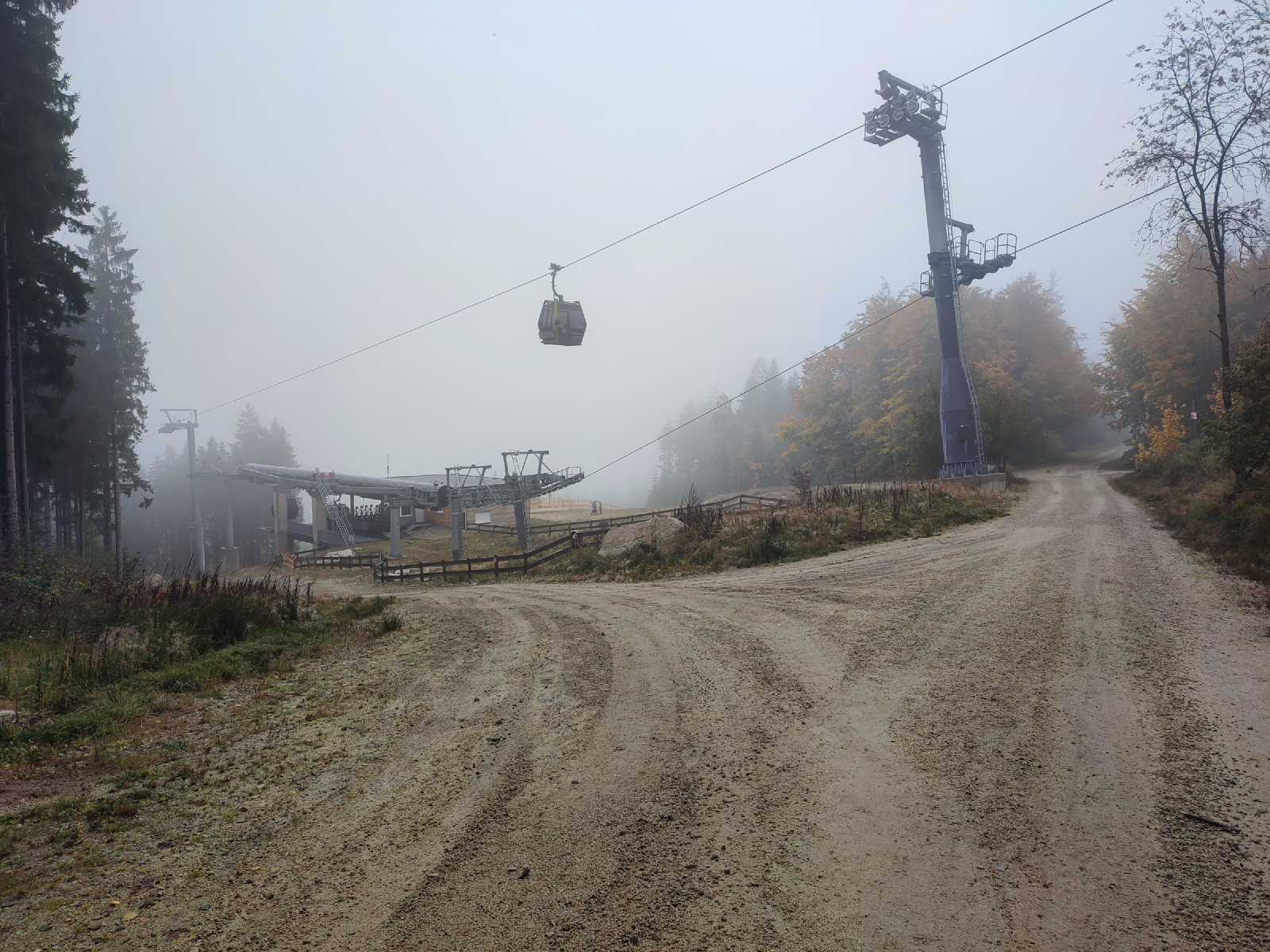
The crossing from Bayreuth to Mariánské Lázně proved to be one of the most challenging segments. At 130 km with 2,500 meters of climbing, much of it became hike-a-bike through the Fichtel Mountains. A hunting party forced me to detour around Sauberg just before the summit, and I had to navigate around the Ochsenkopf twice more to avoid the same hunters. When I finally passed the cable car’s middle station, I felt proud as can be.
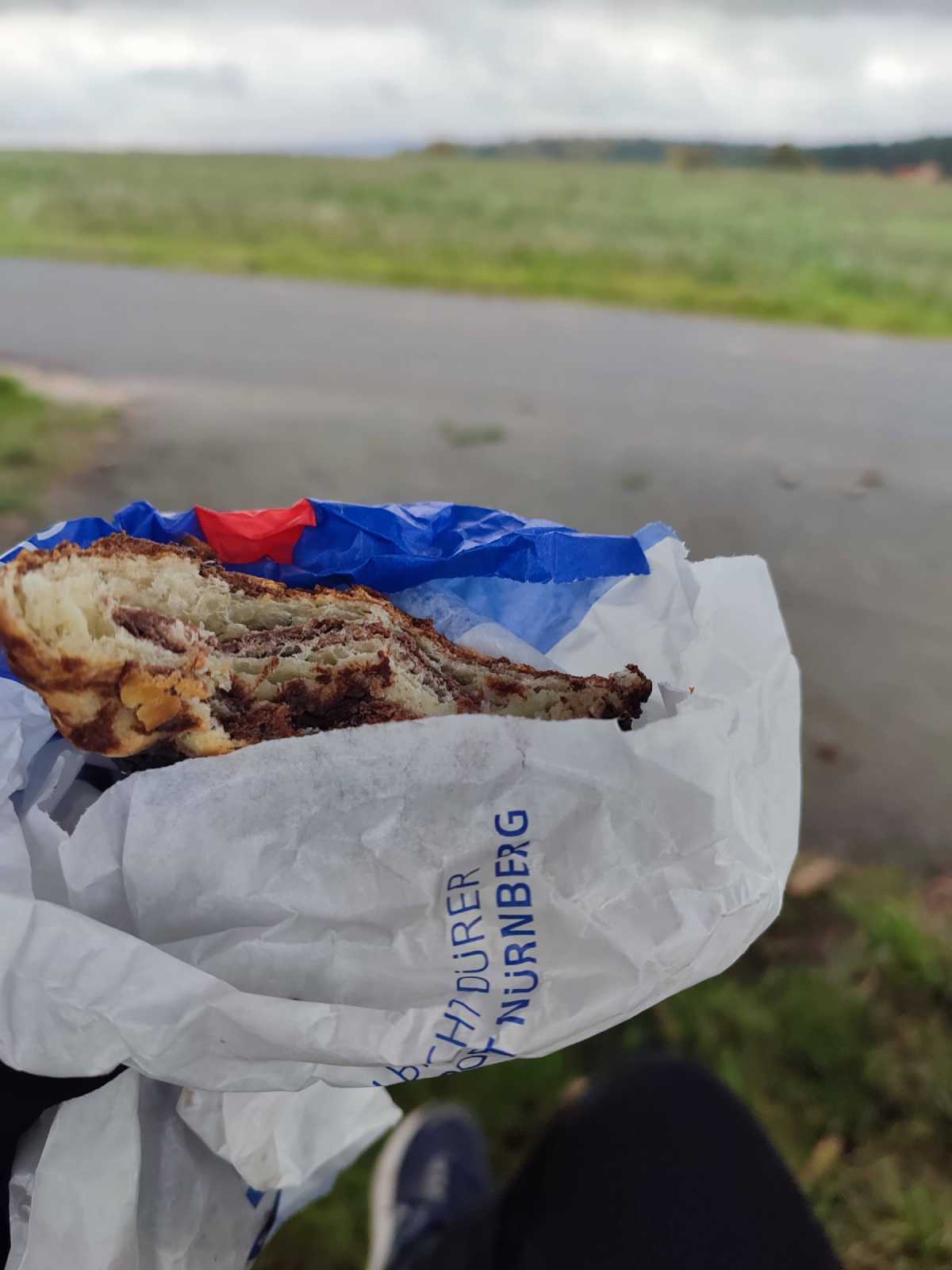
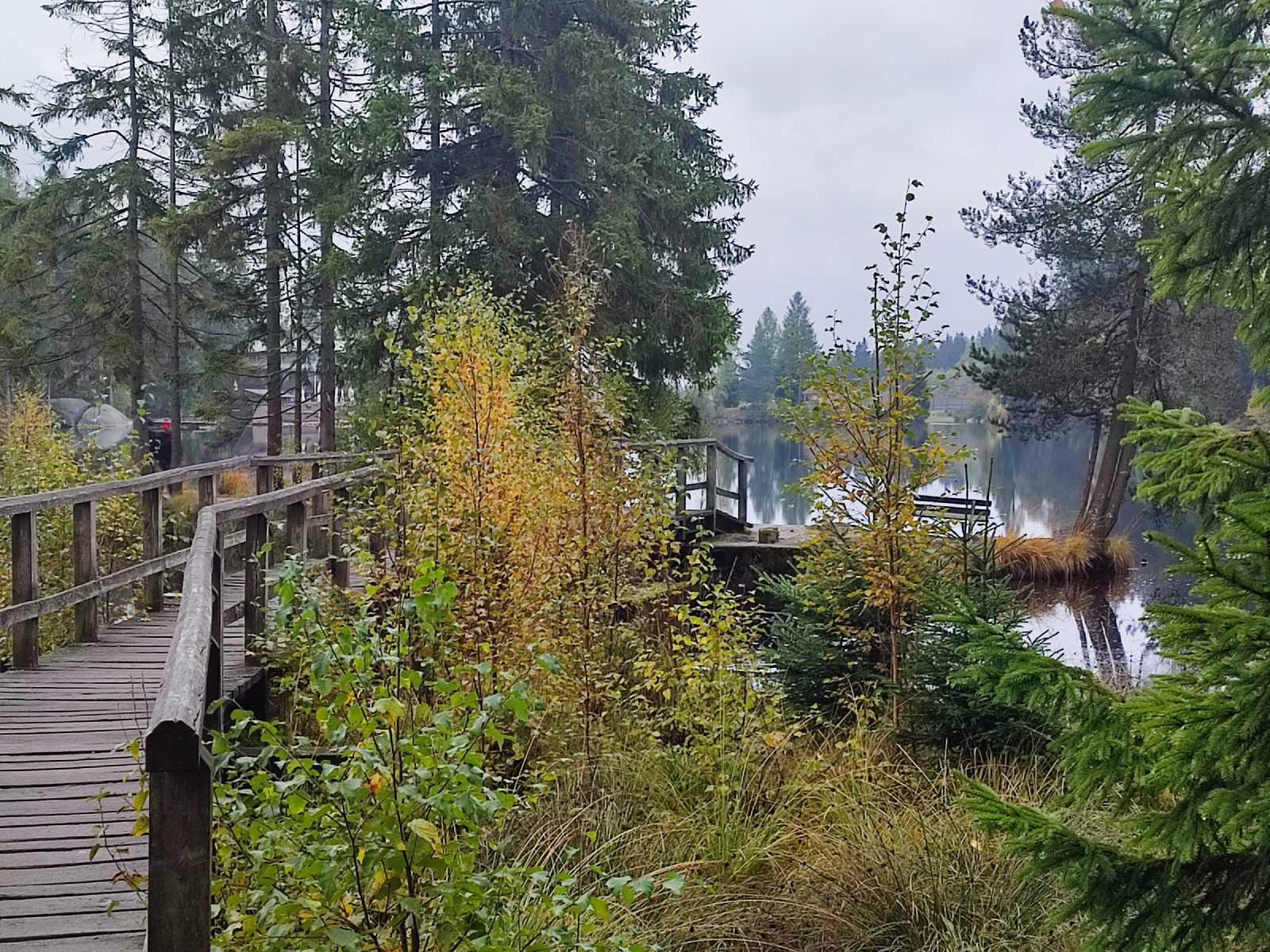
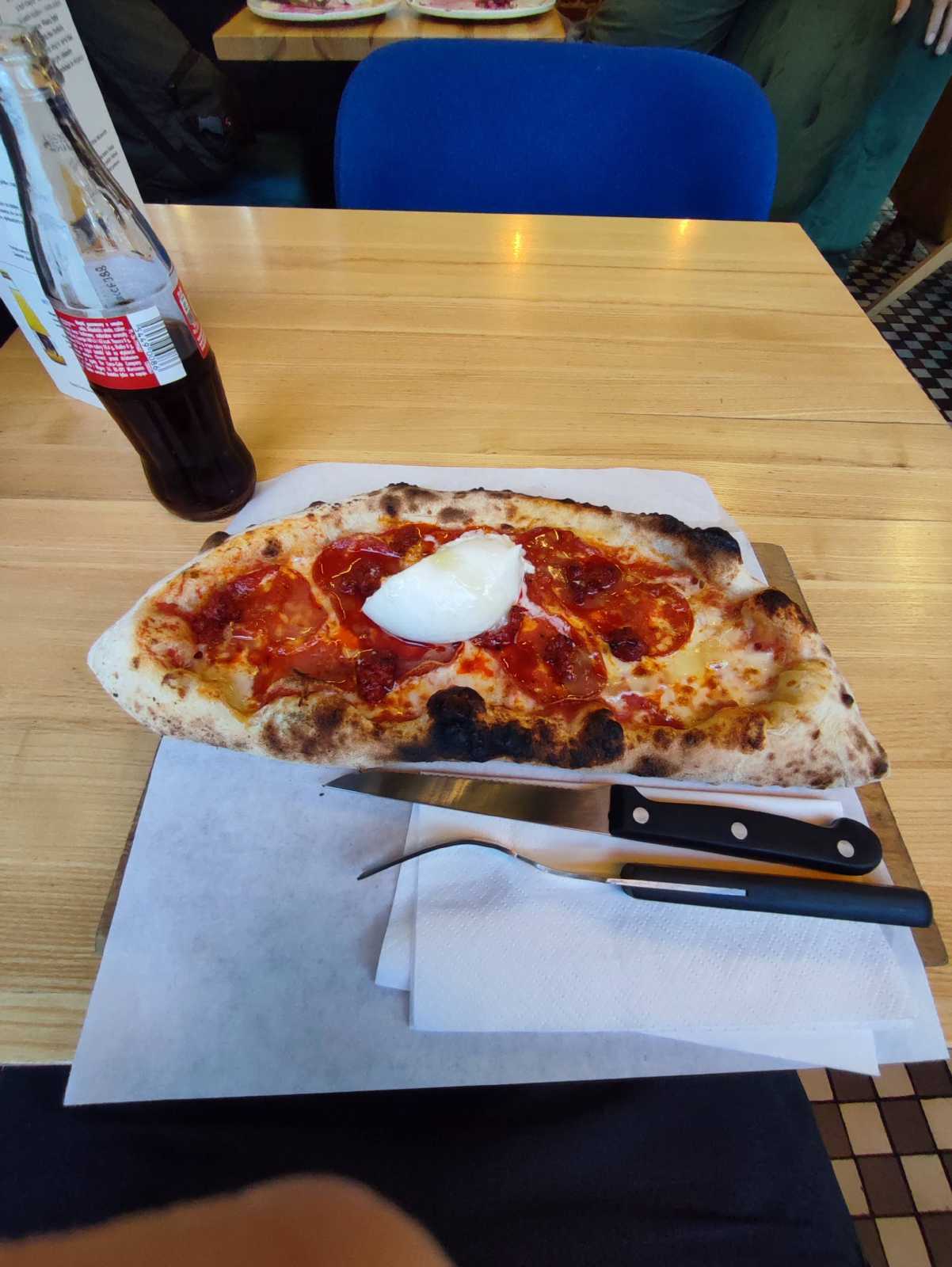
The landscape revealed itself through morning mist: three pairs of roe deer appearing like ghosts in the fog, the Fichtelsee reflecting autumn colors, and savoury chocolate croissant from bakery Diehl that tasted like baked Kinder chocolate bars. Trying local specialities at bakeries or budger shops like this one, is what I enjoy most about these trips. I typically ask the staff, what there shop is most known for or what they personally like best.
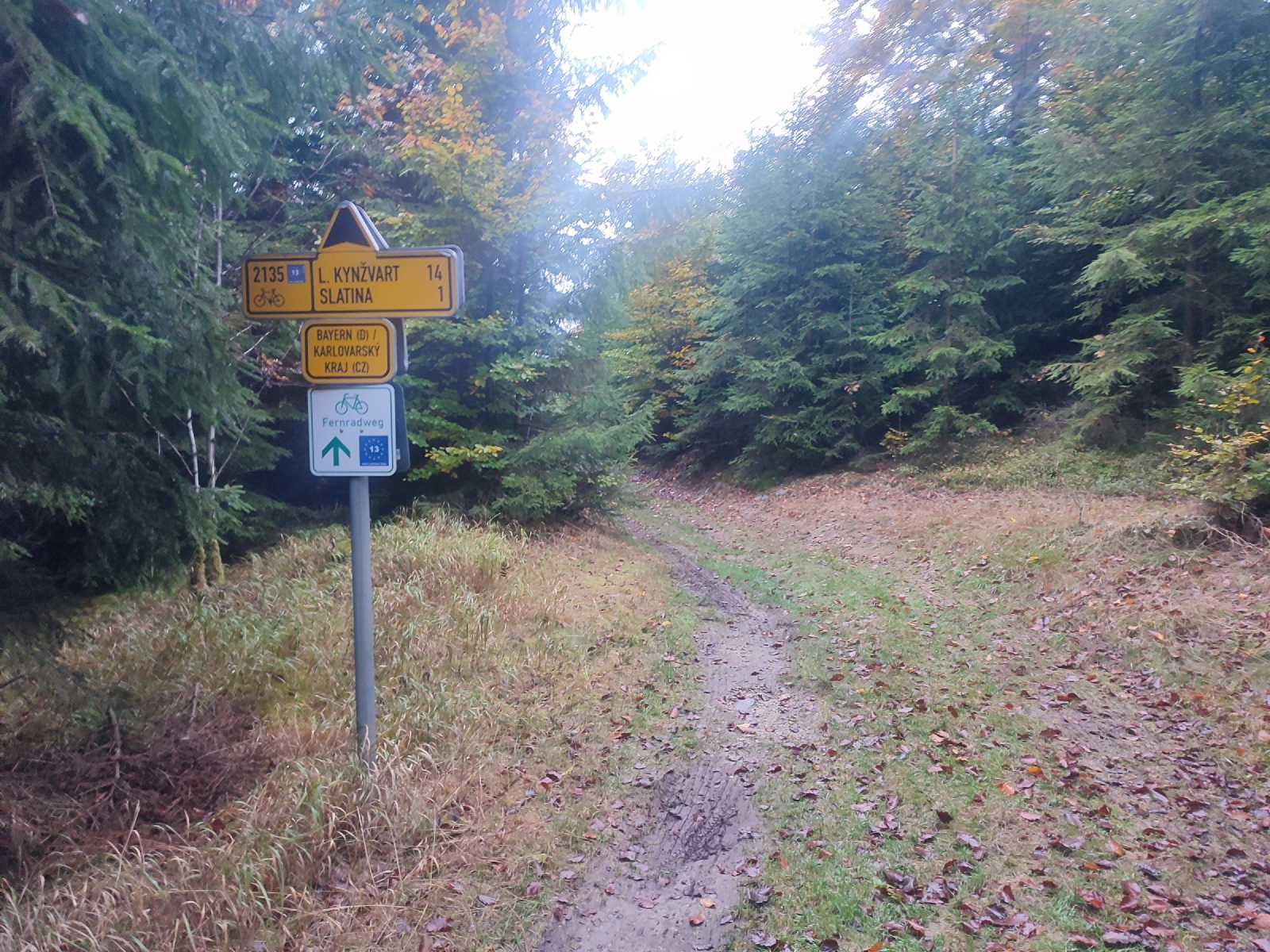
At the Czech border, I crossed the EuroVelo 13 (commonly known as Iron Curtain Trail) and wondered if that might be my next adventure.
Calendar Picture Country
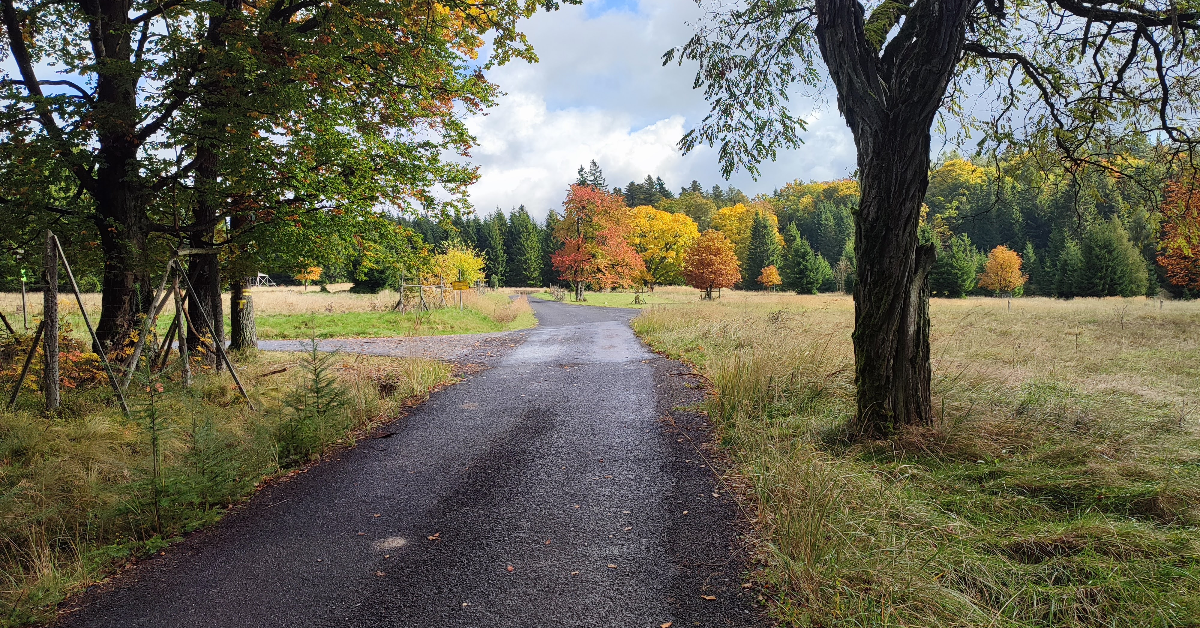
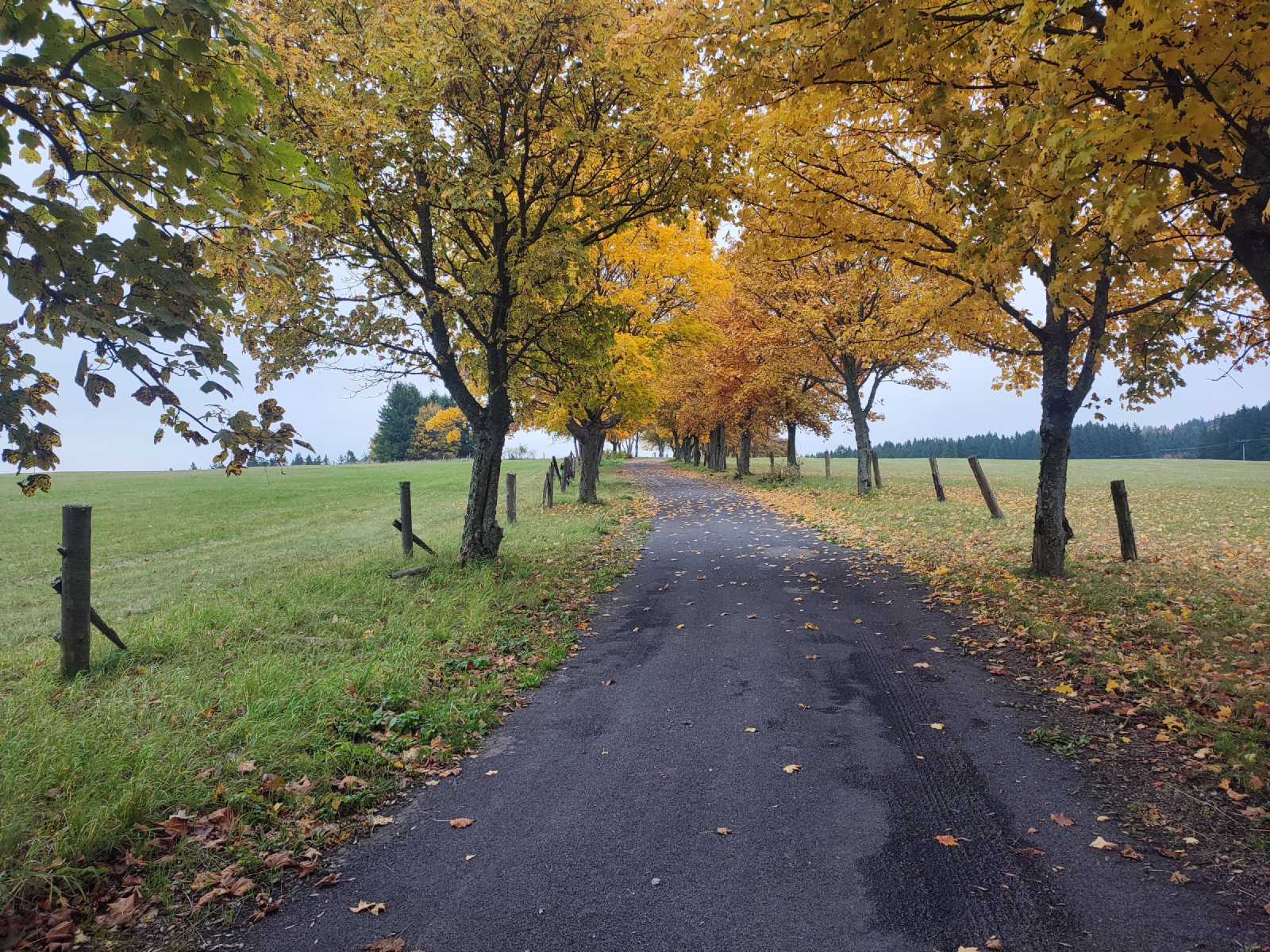
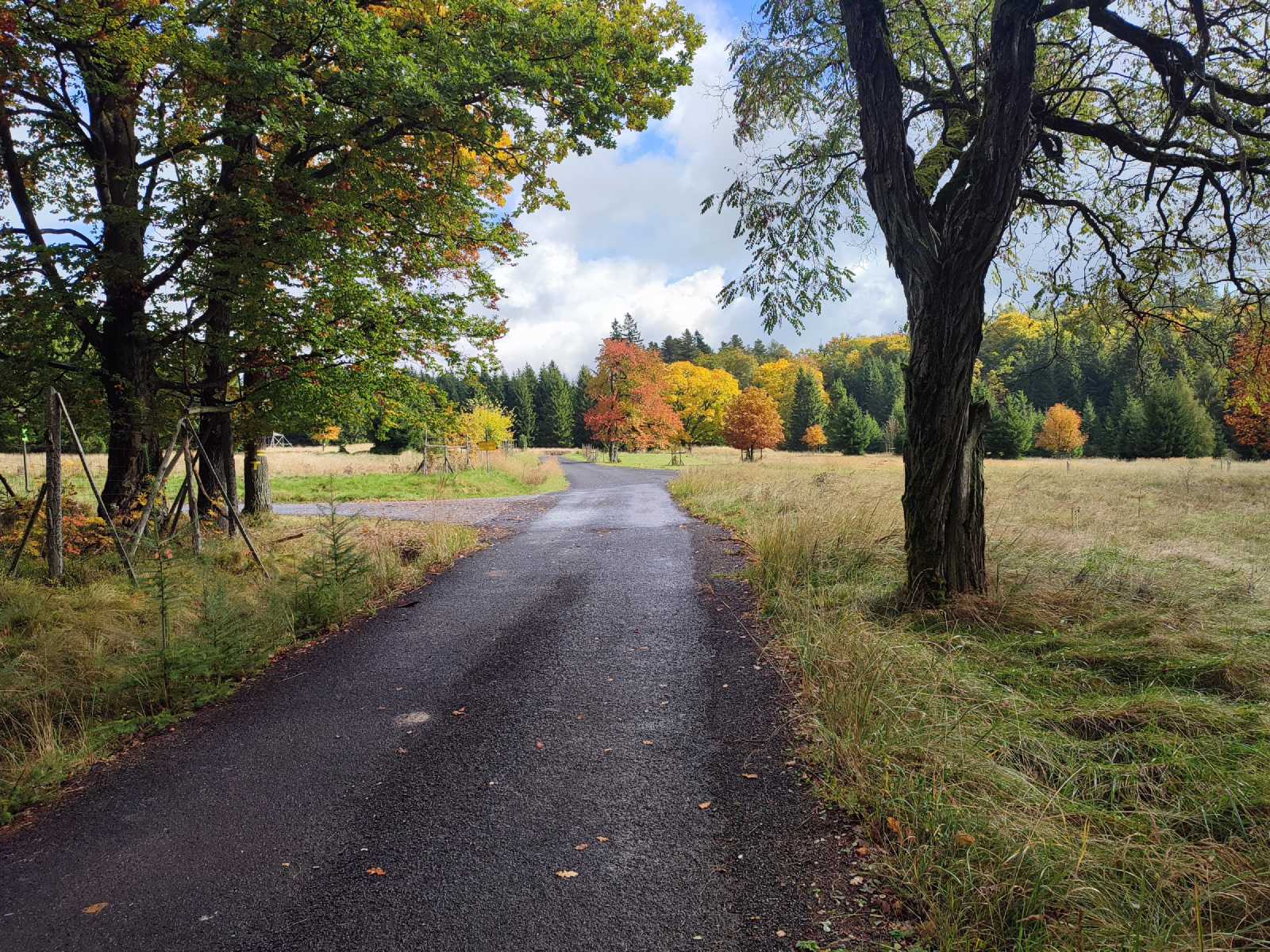
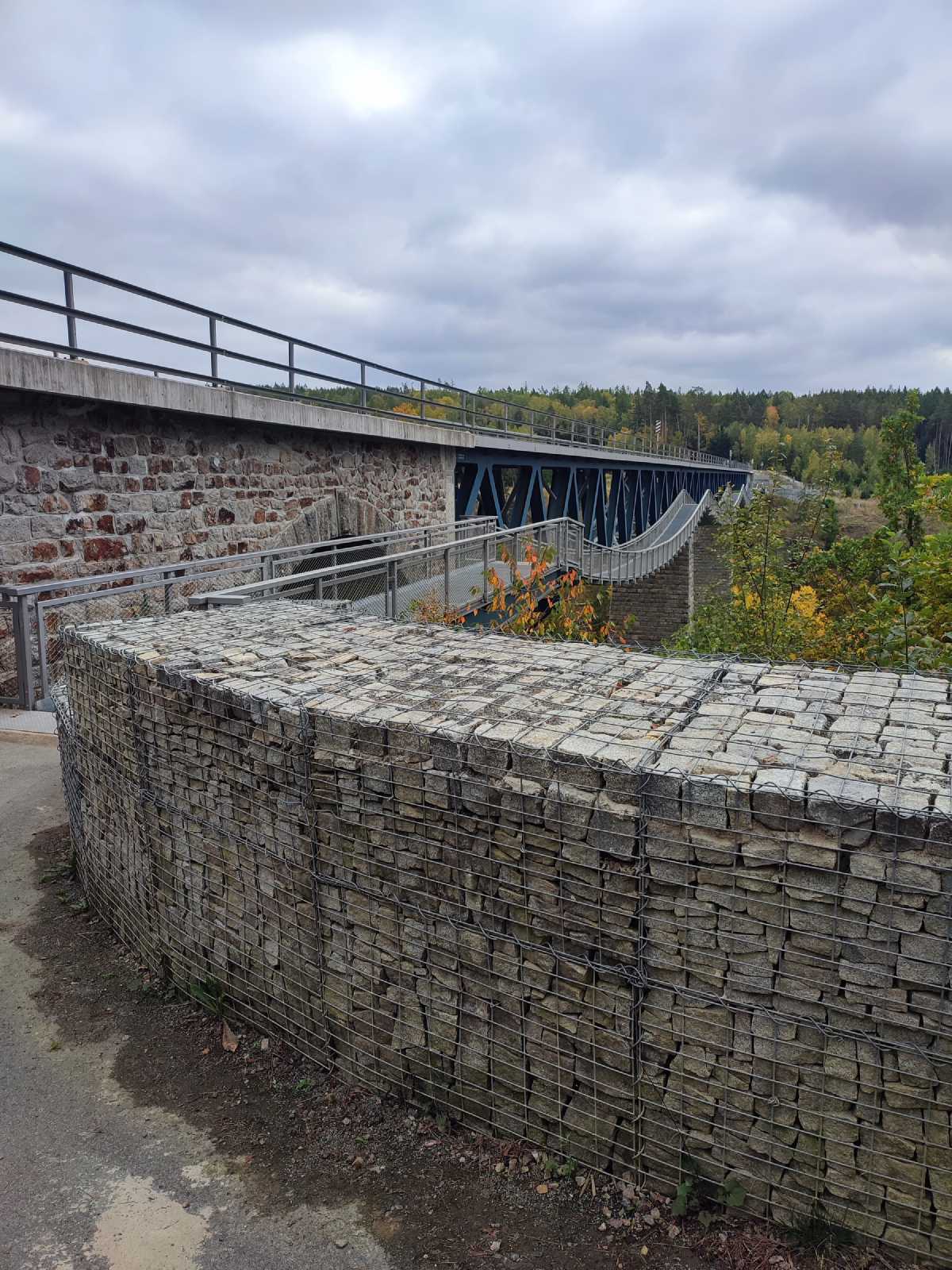
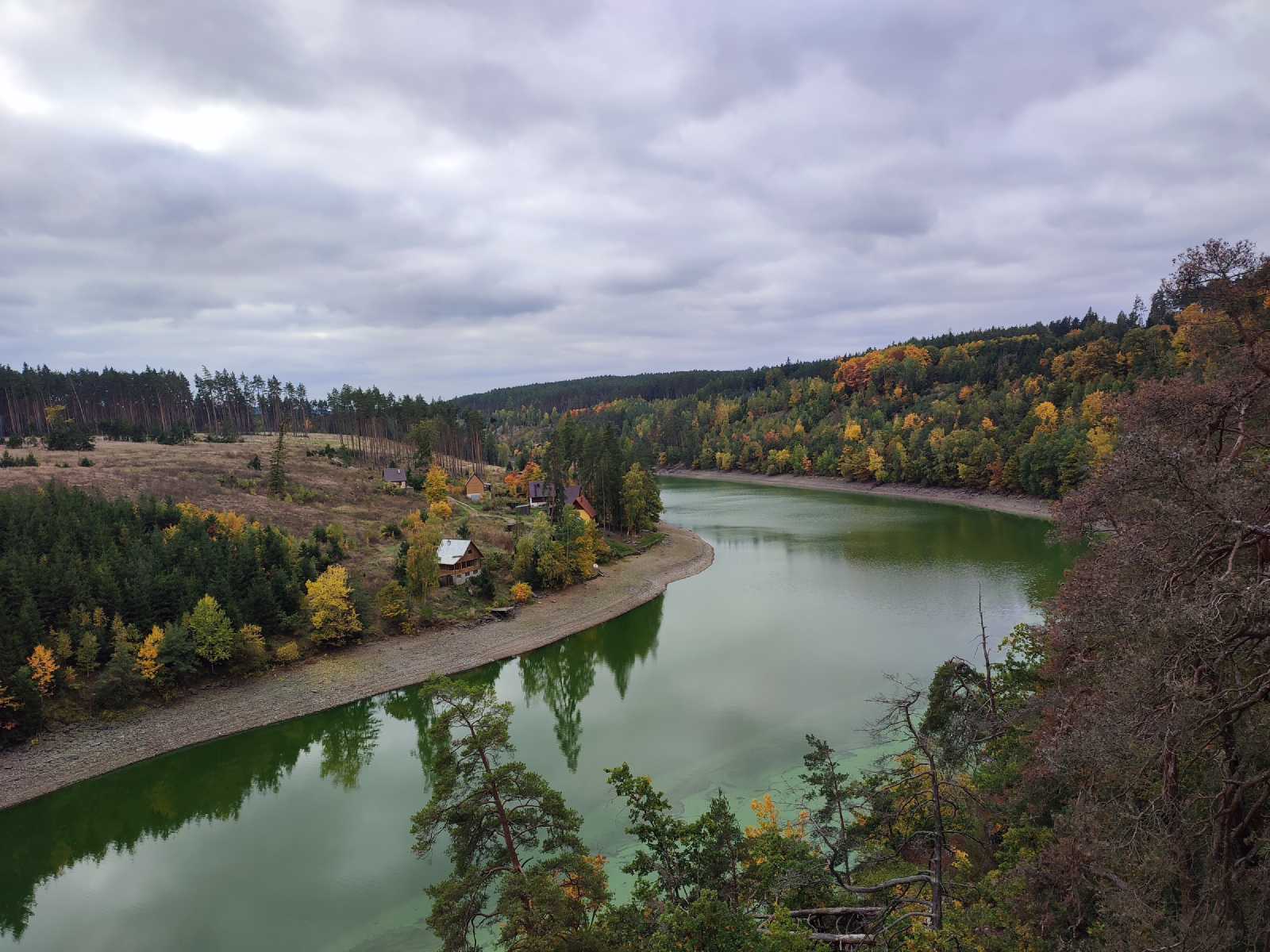
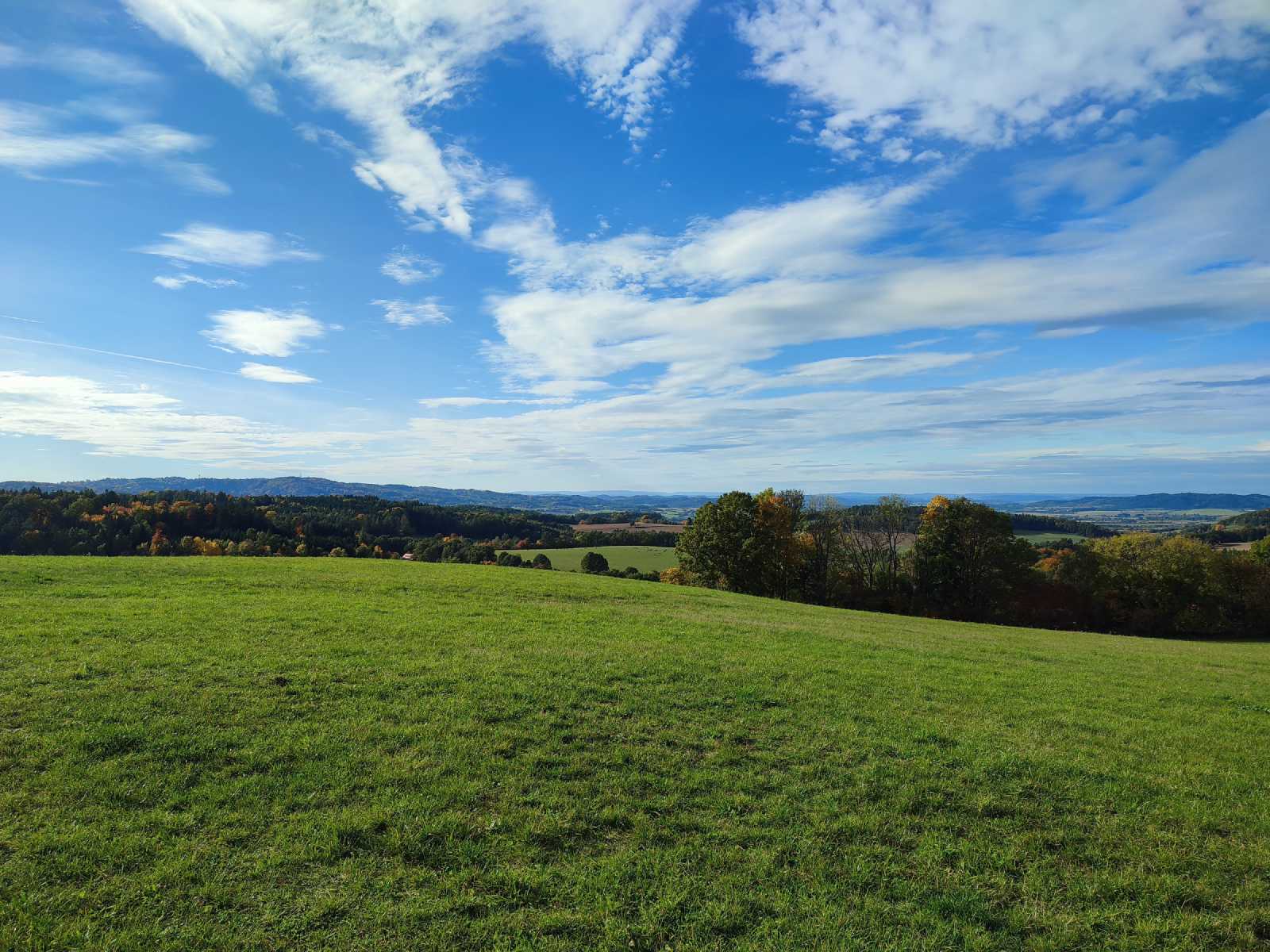
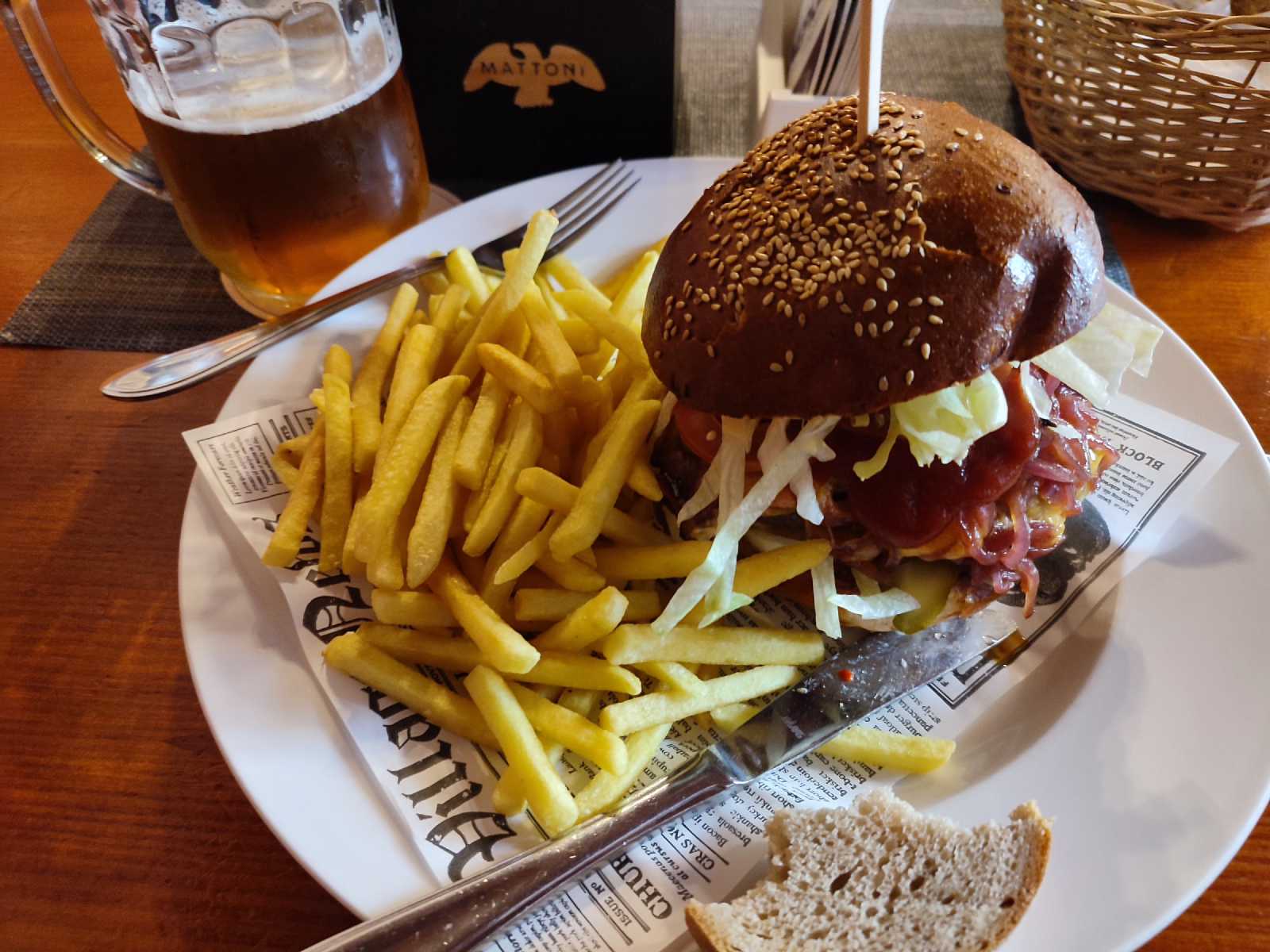
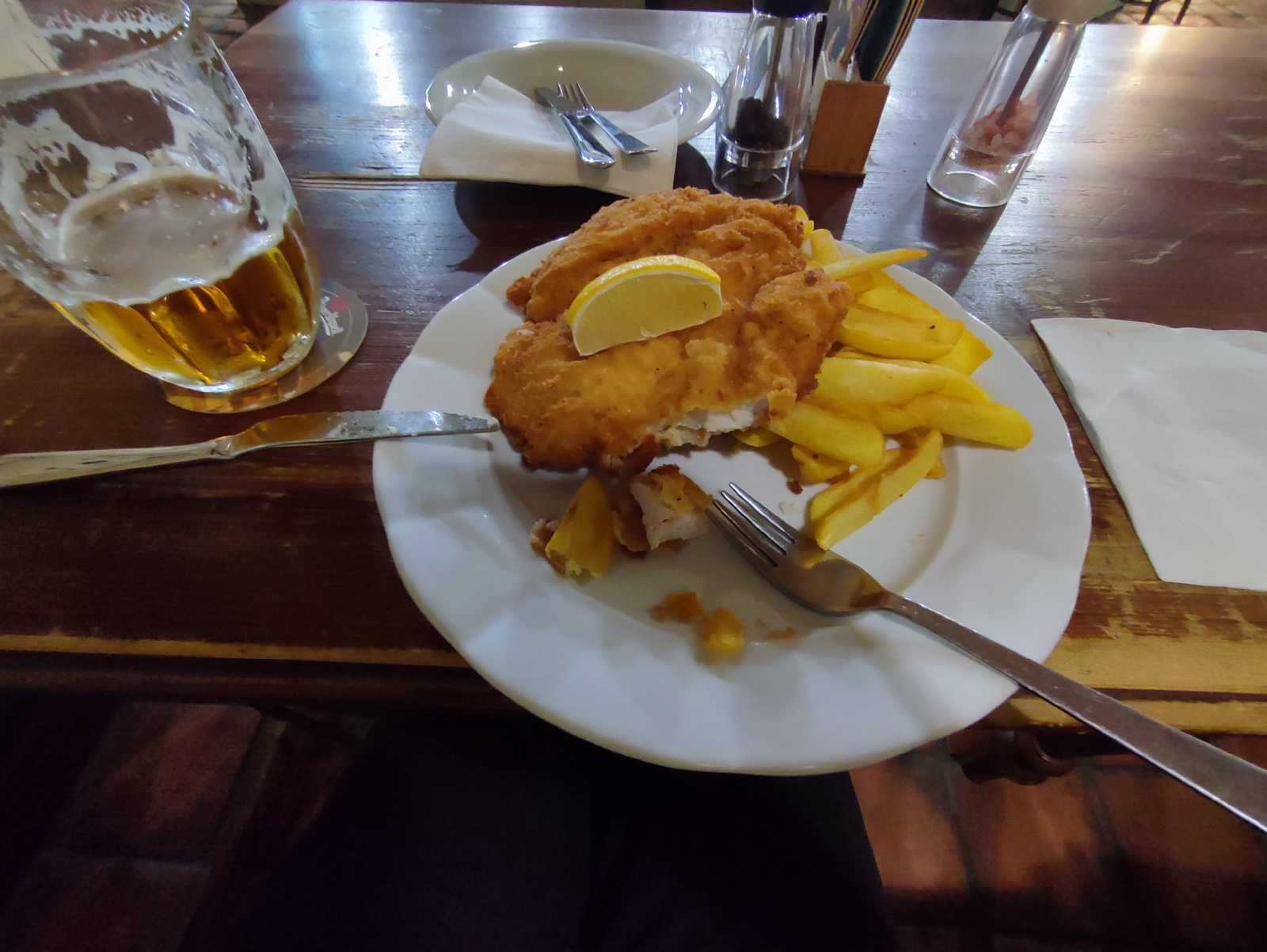
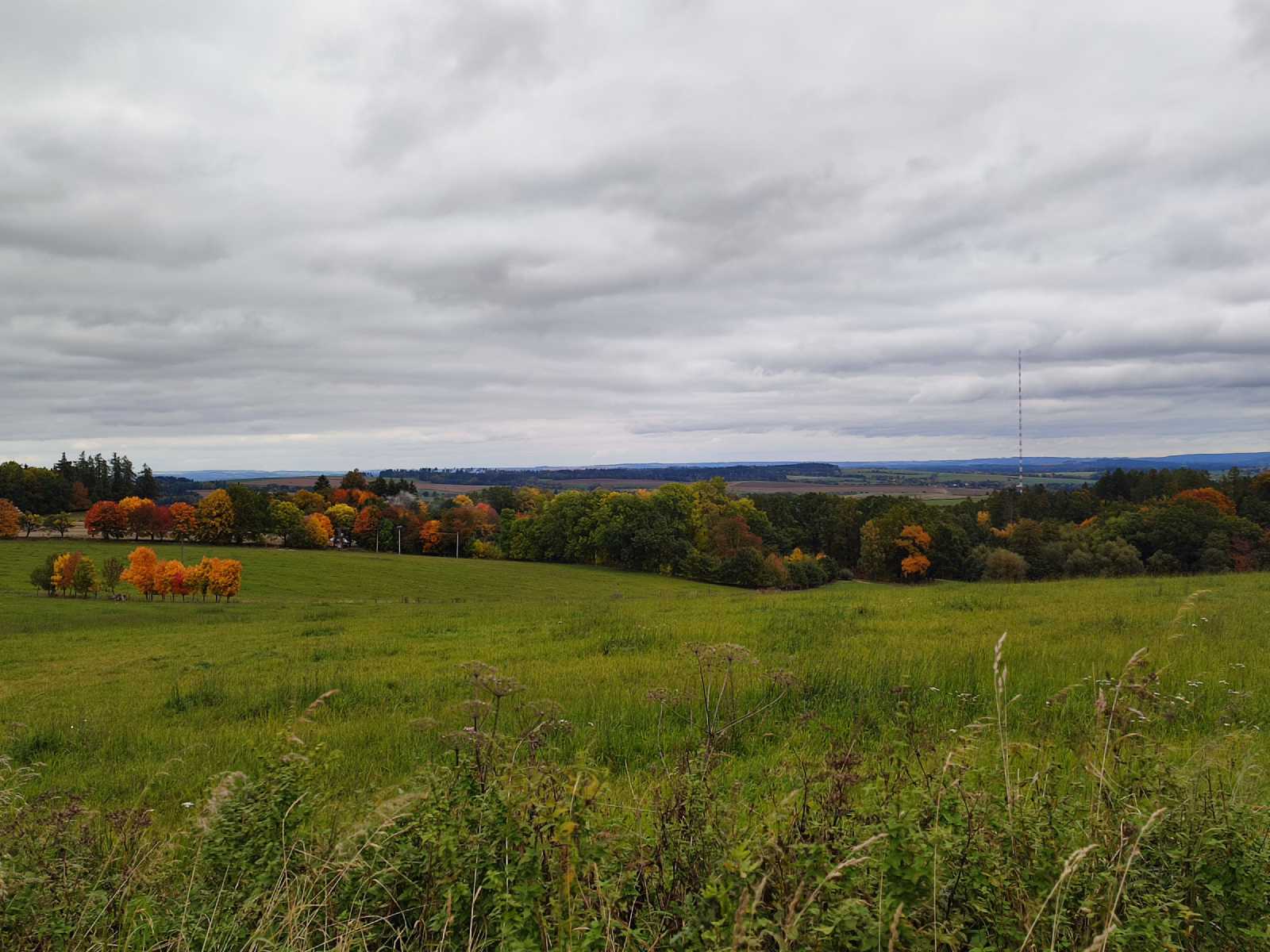
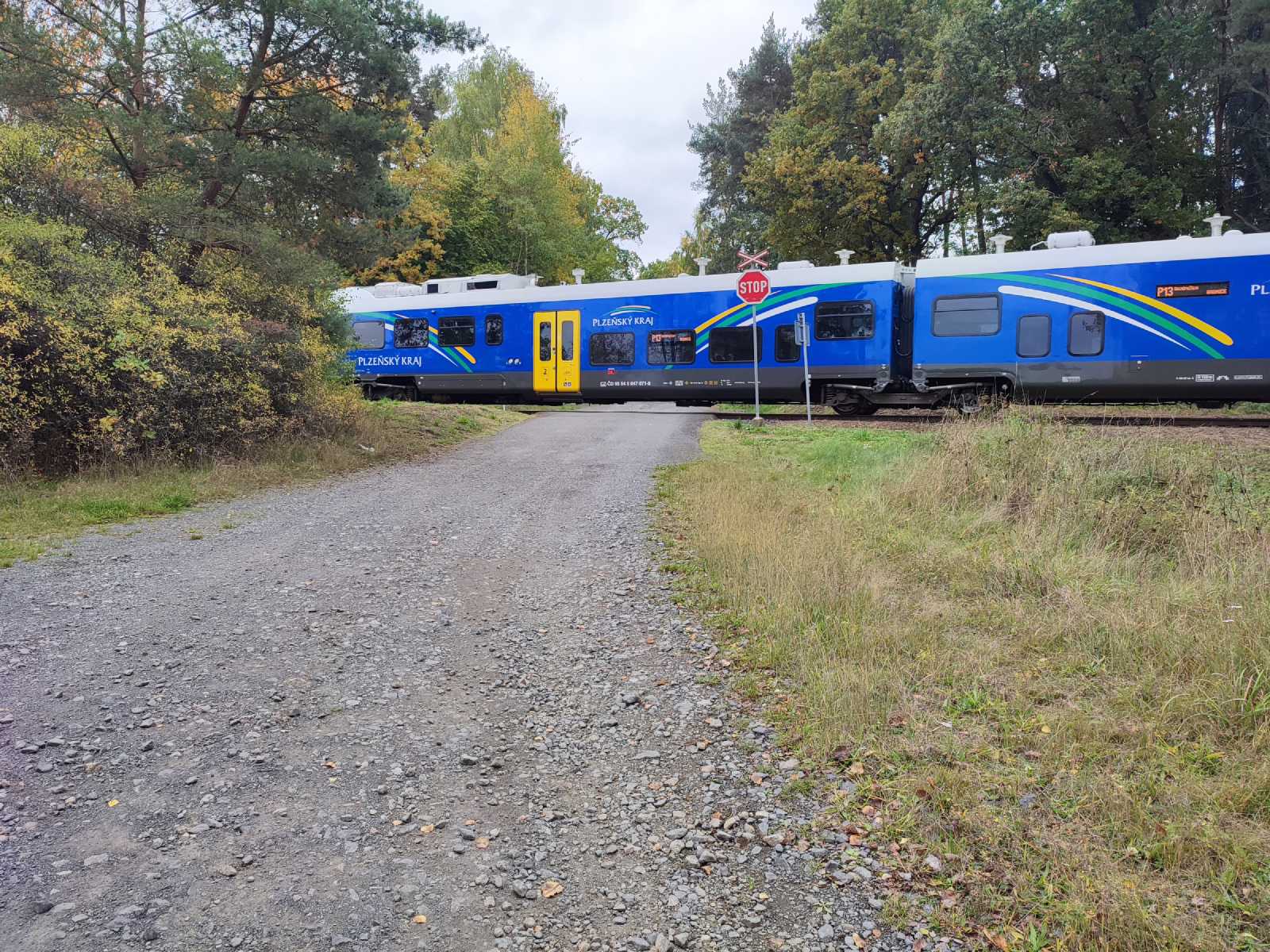
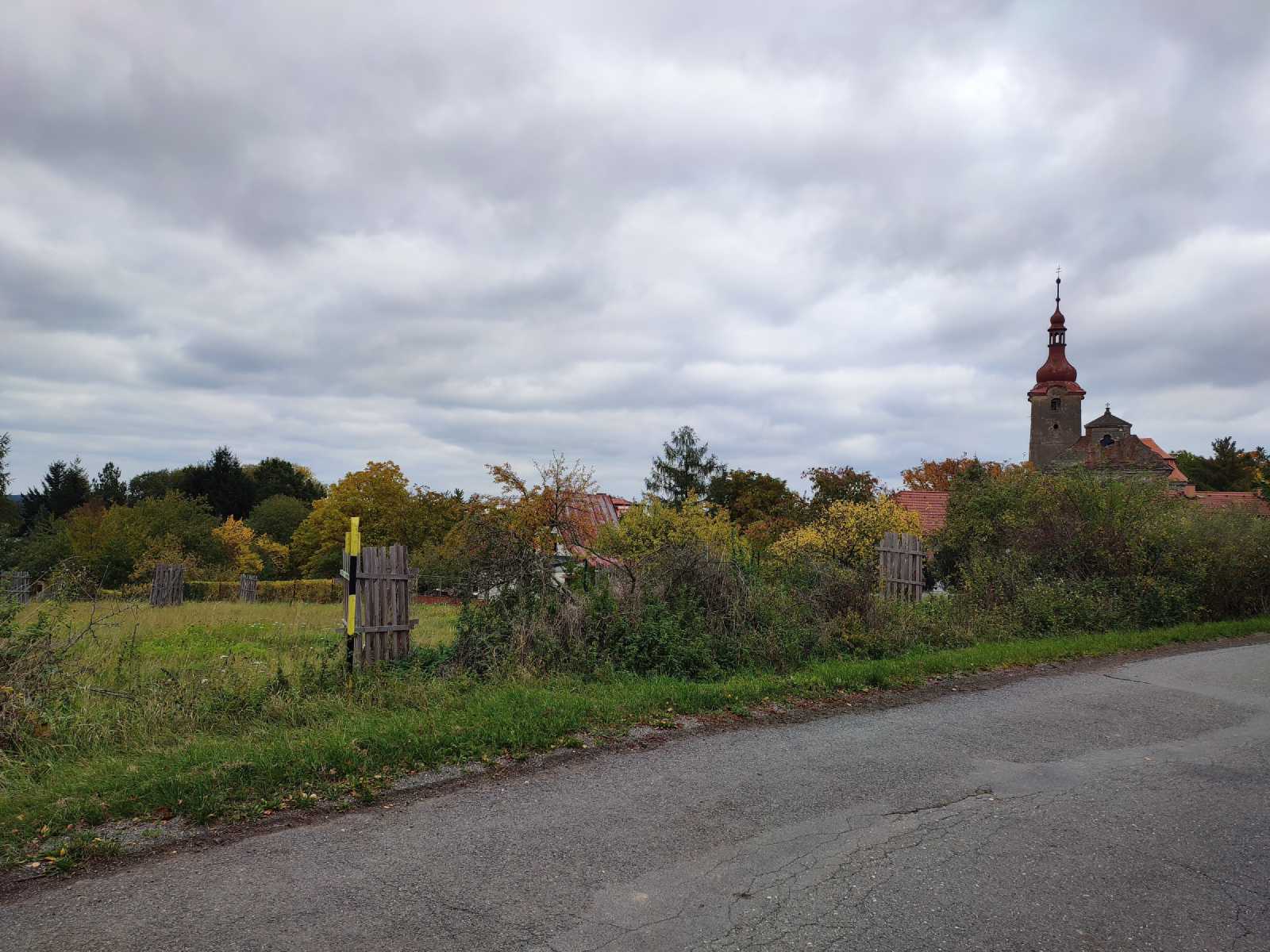
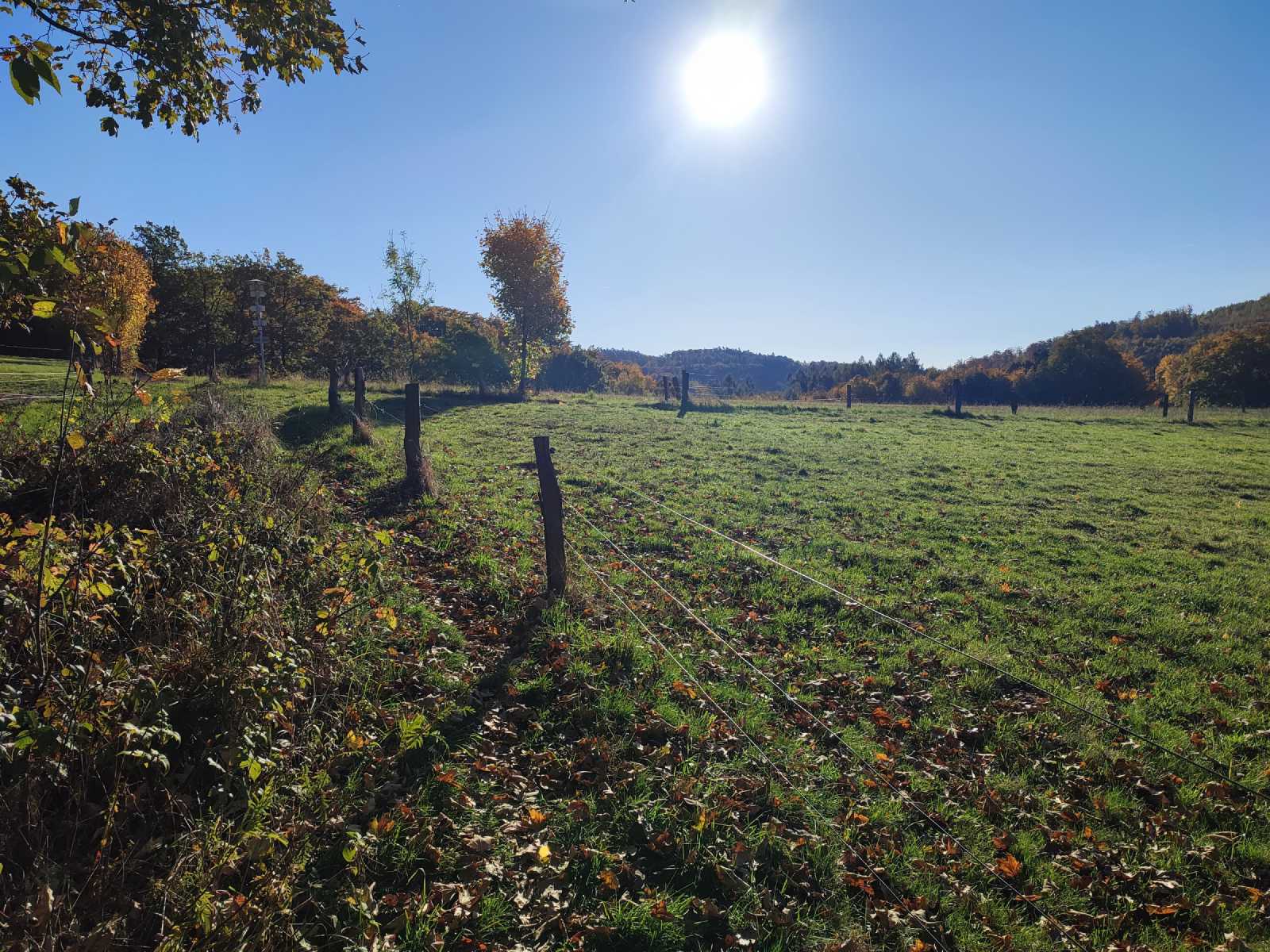
The Czech landscape unfolded like calendar pictures. Rolling through Mariánské Lázně and toward Pilsen (home to the Pilsner, cheers 🍻), I encountered some of the trip’s finest moments: the spectacular hanging bridge crossing over the Mže River, fields that looked like Windows XP wallpapers, and villages structured exactly as in grandmother’s picture books-a pond, a chapel, a bus stop.
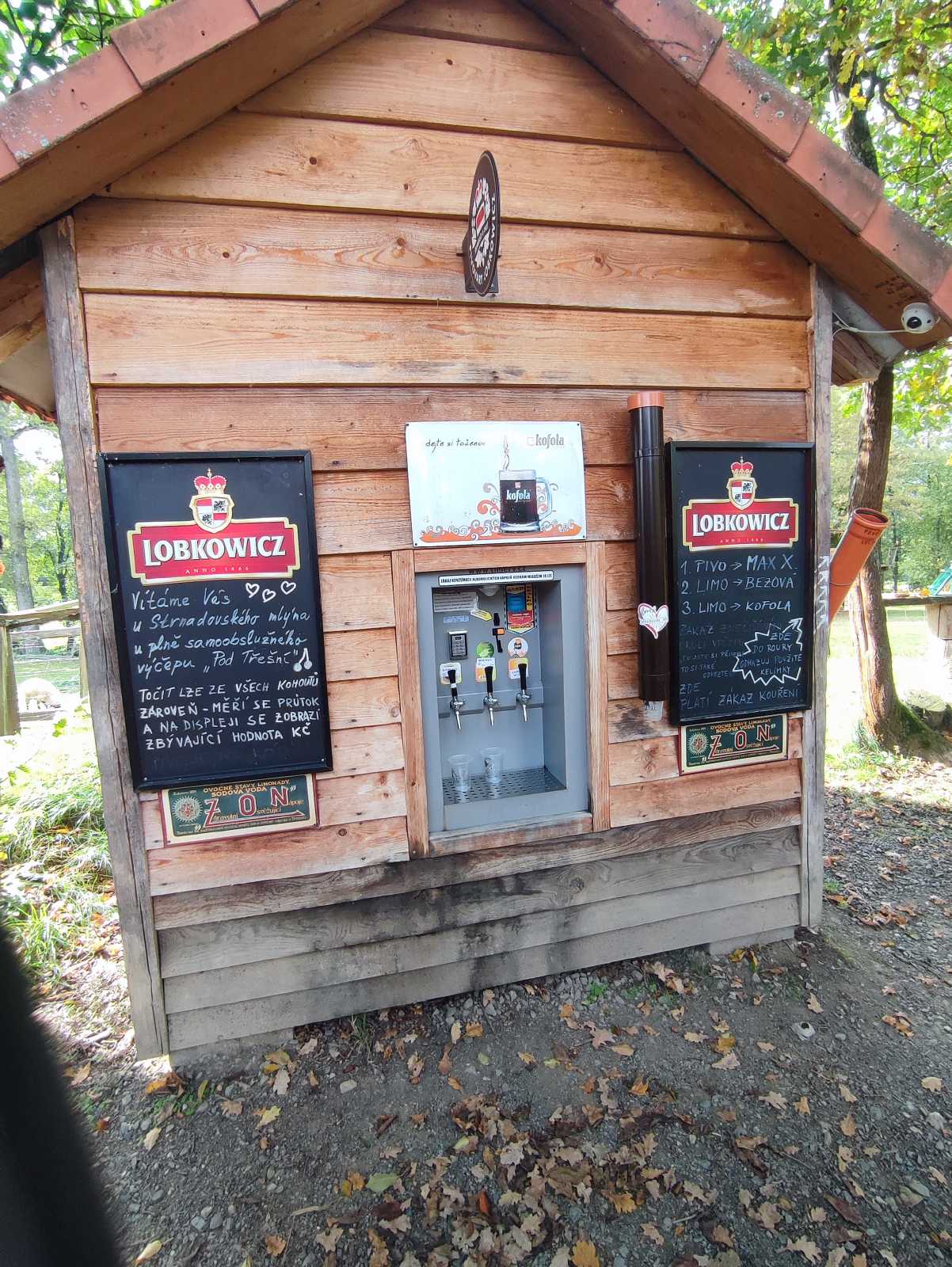
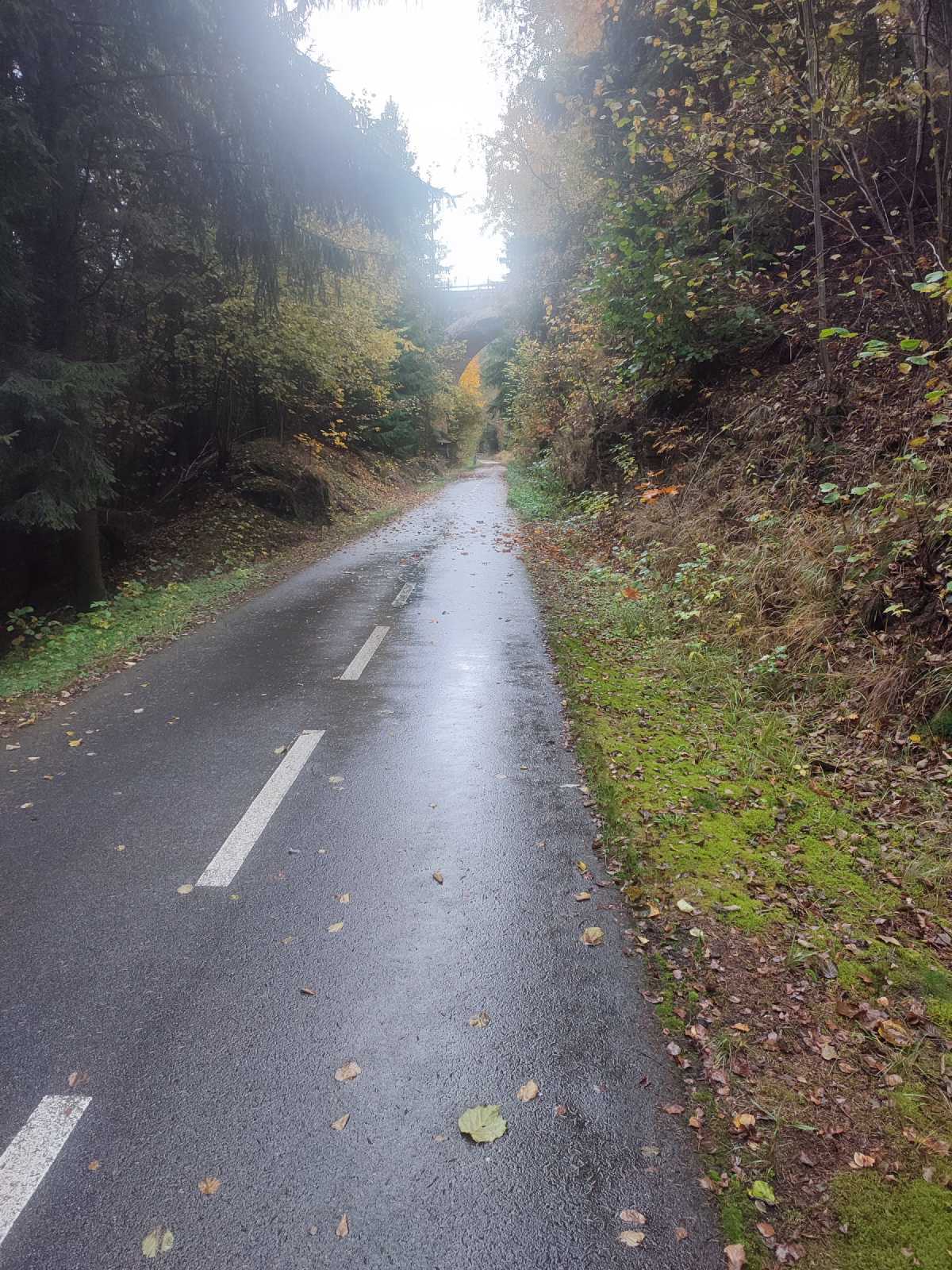
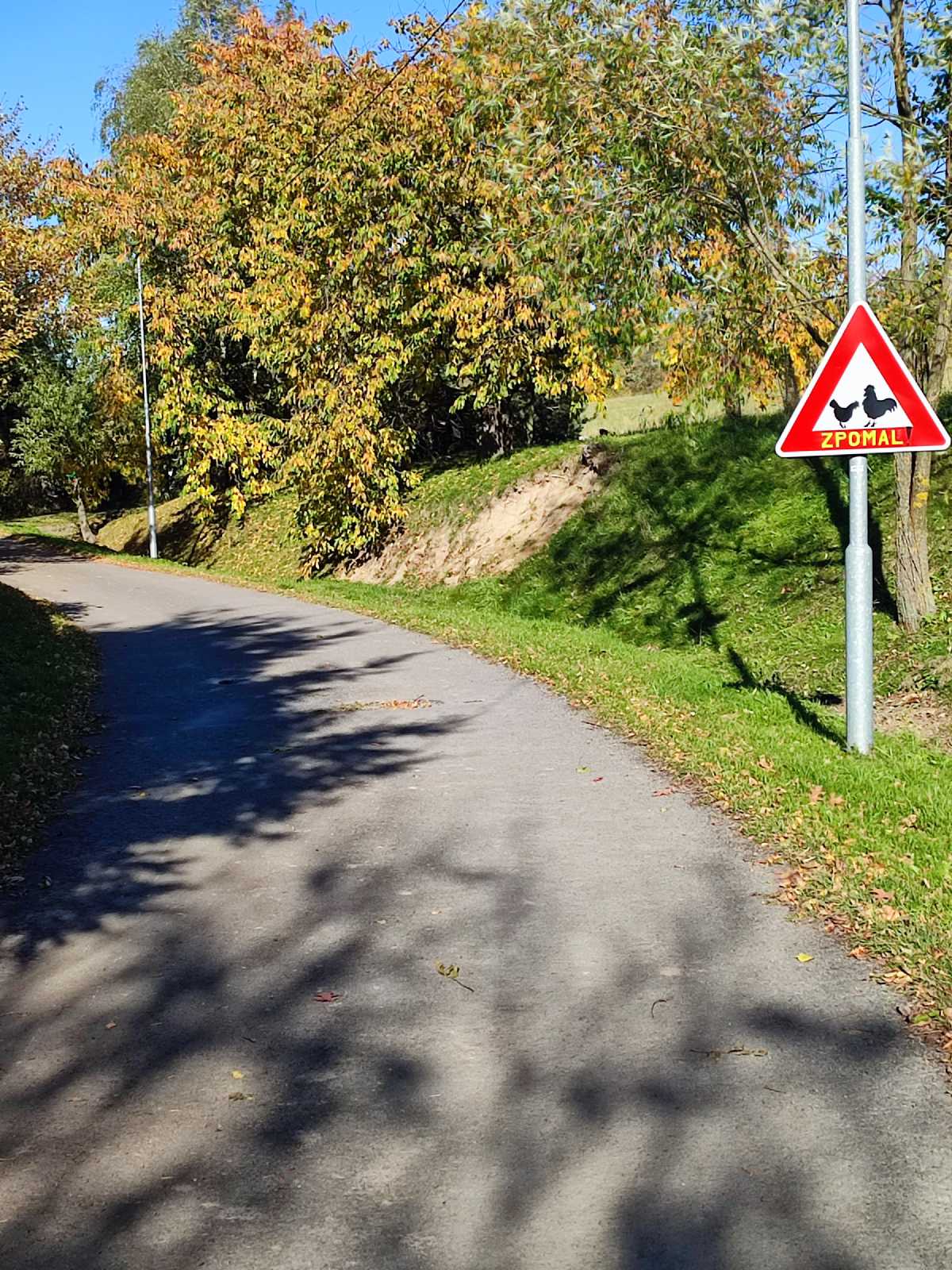
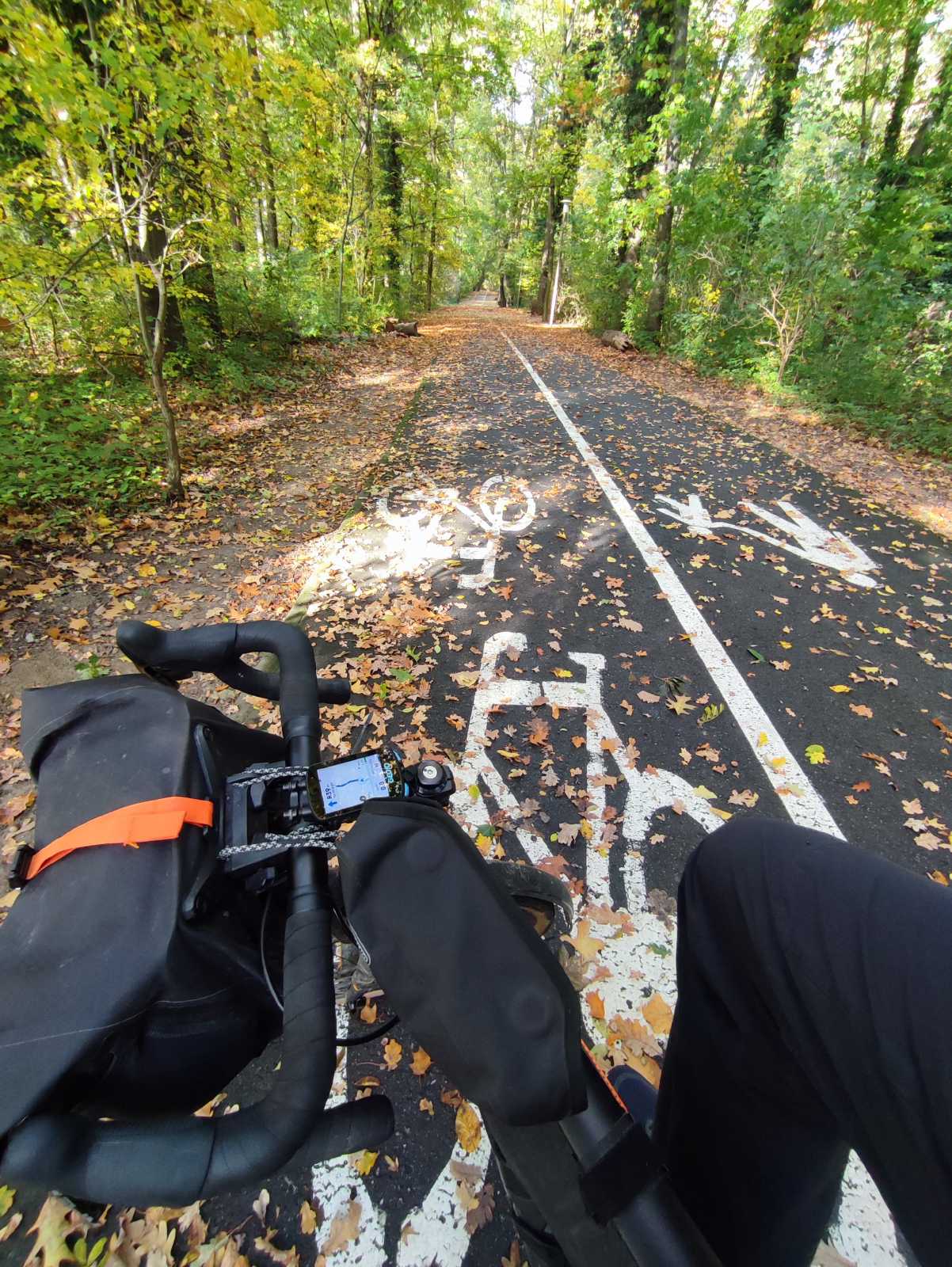
The Czechs are pragmatic about roads and cycle paths. A yellow sign with a cyclist means it’s both, shared peacefully when traffic is light. Throughout my entire trip I only encountered few other cyclists. The dogs, however, bark their souls out as you pass. In vain.
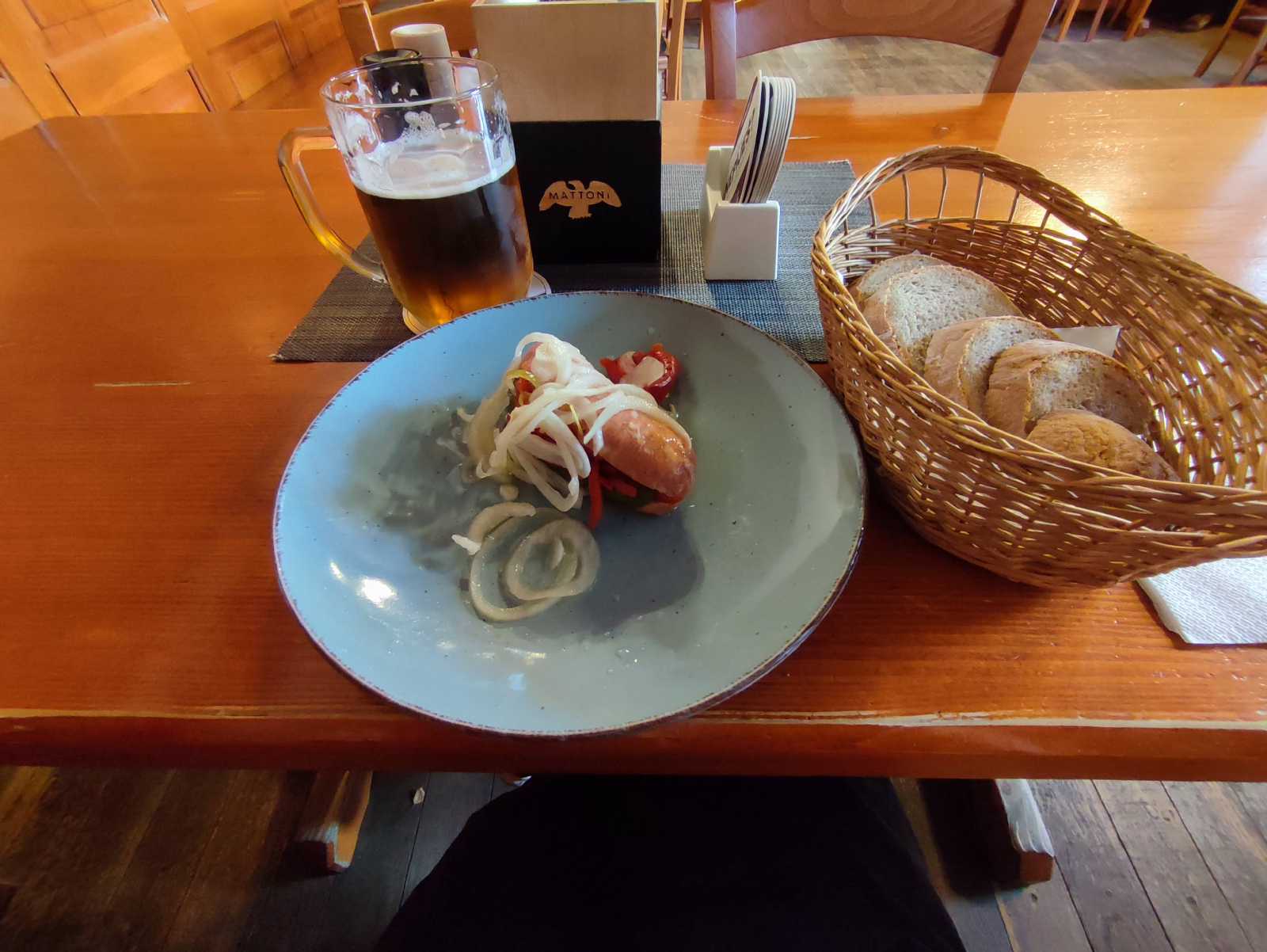
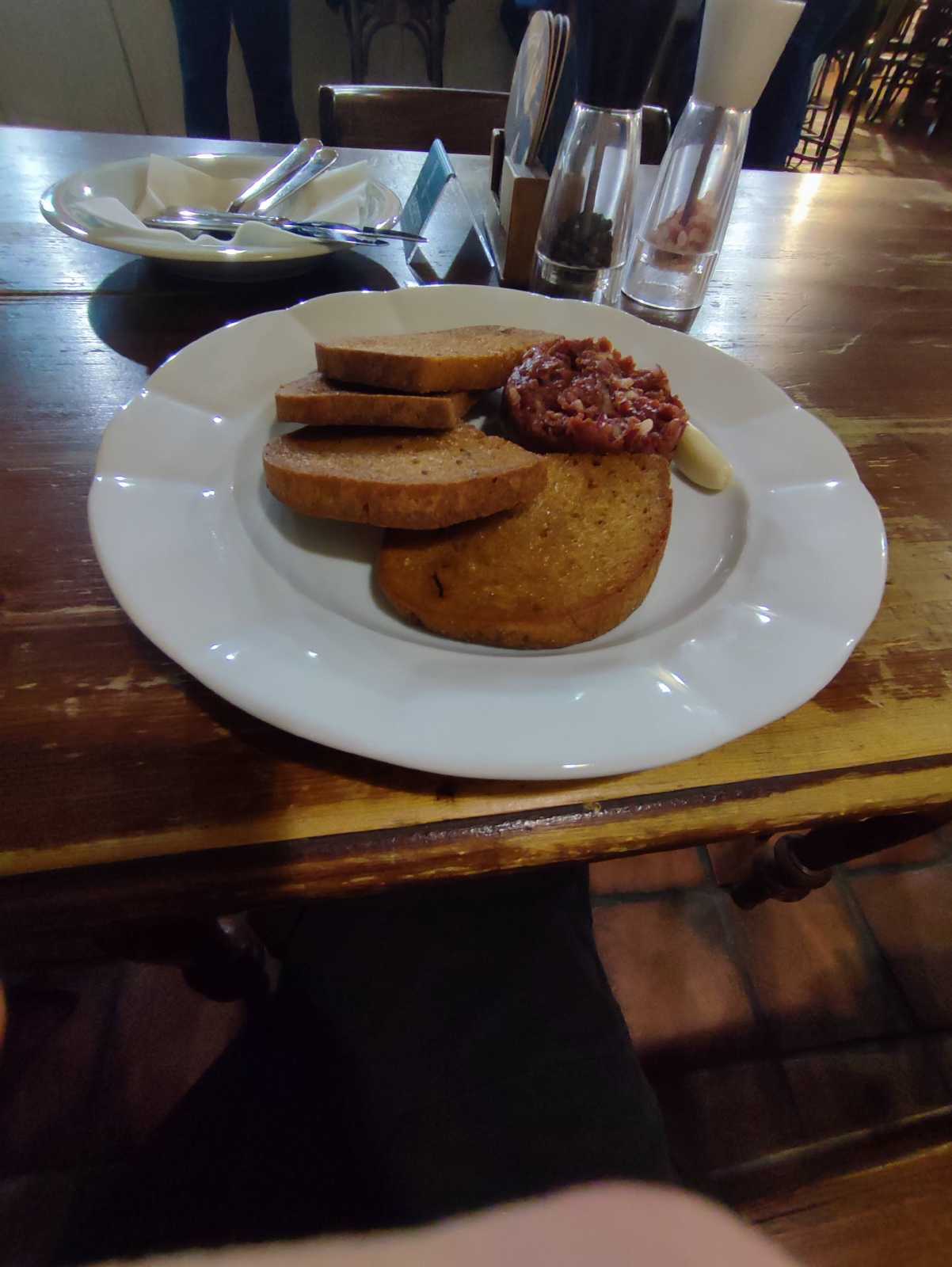
I stayed mostly in traditional Czech pensions throughout this region-simpler than hotels but offering everything a cyclist needs. They became one of my favorite discoveries of the trip. Warm hospitality, hearty breakfasts, and that particular charm of family-run establishments where the owner might only speak Czech but communicates perfectly through gestures, German and Google Translate. Finding secure storage for my bike was never a problem - accommodations always found creative solutions. Side corridors, garages, dedicated bike rooms in German youth hostels. Once, memorably, my trusty steed spent the night in the accessible toilet, which the hotel proudly declared its official bike shed.
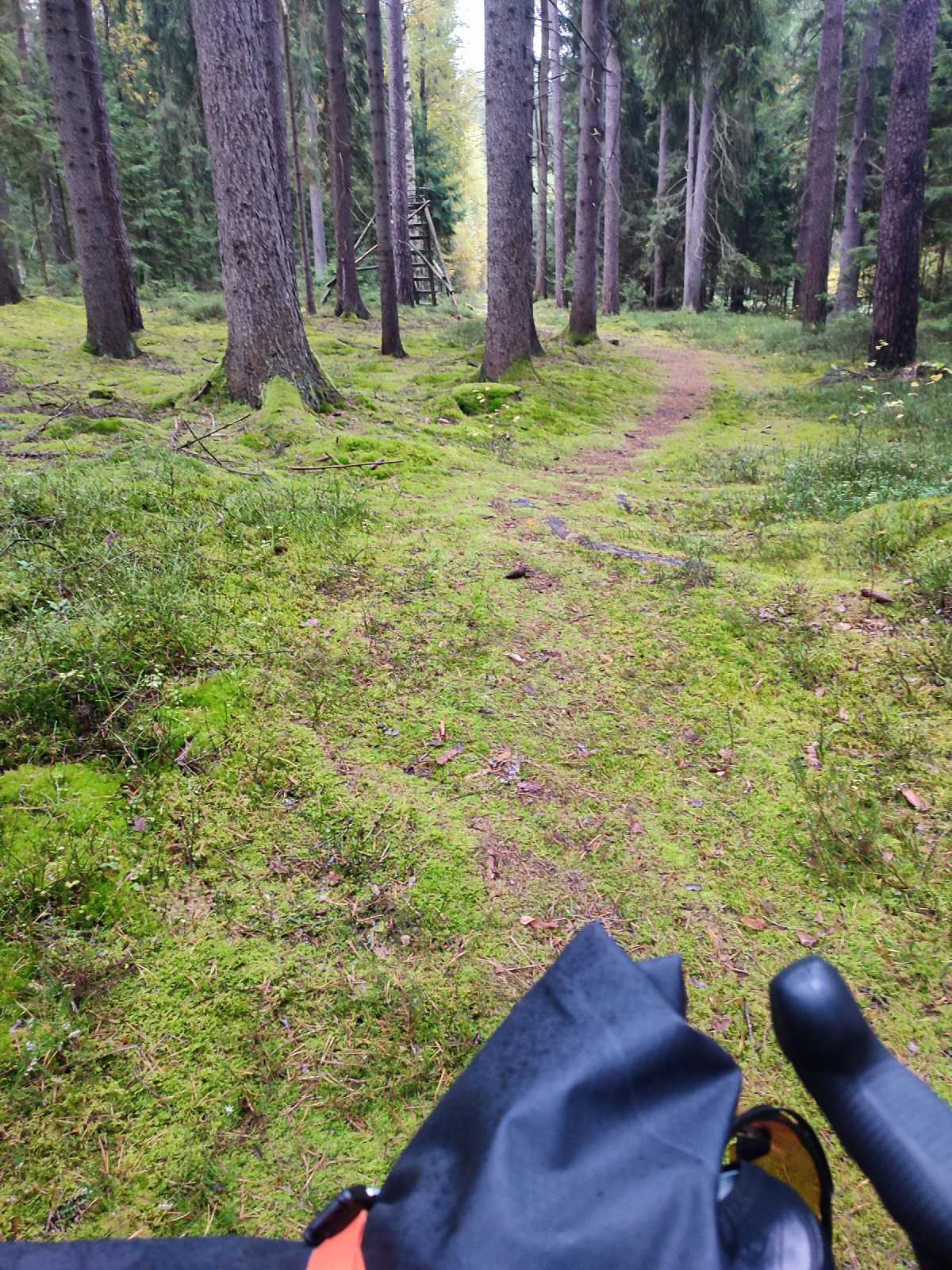
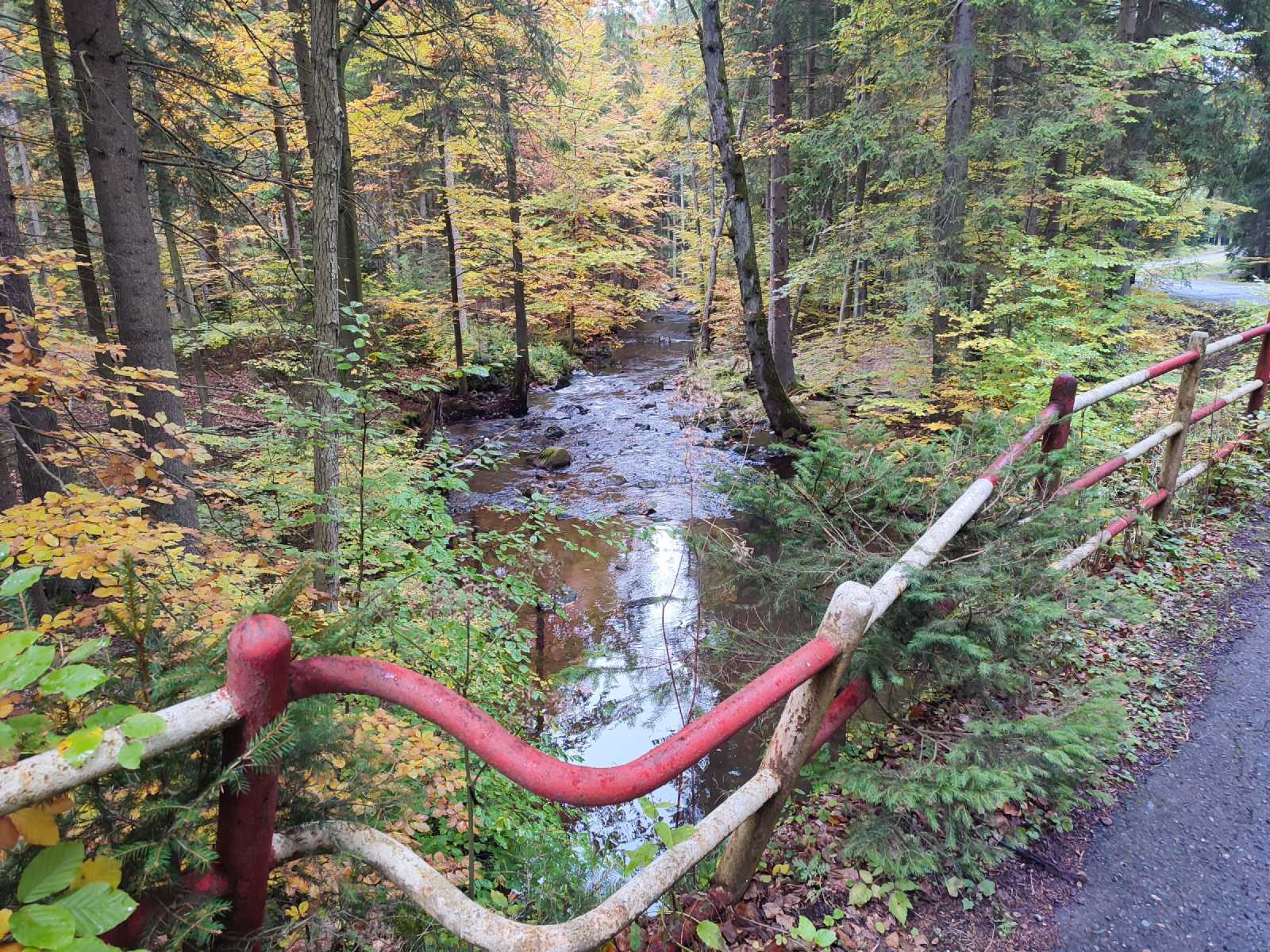
I crossed paths with the Camino de Santiago and spotted my daily record of 14 roe deer standing calmly at the forest edge. The forests themselves seemed to change character with massive clear-cuts.
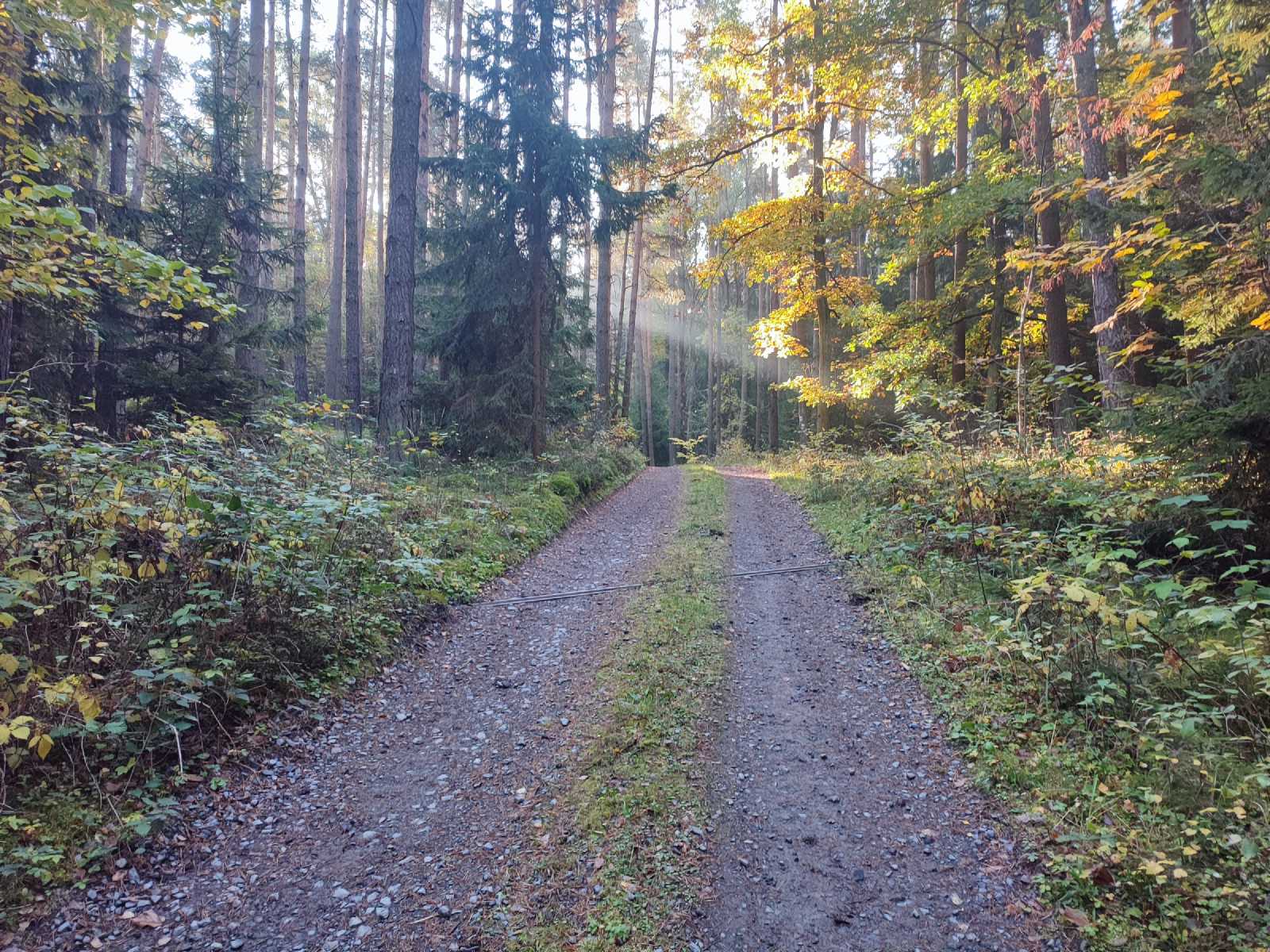
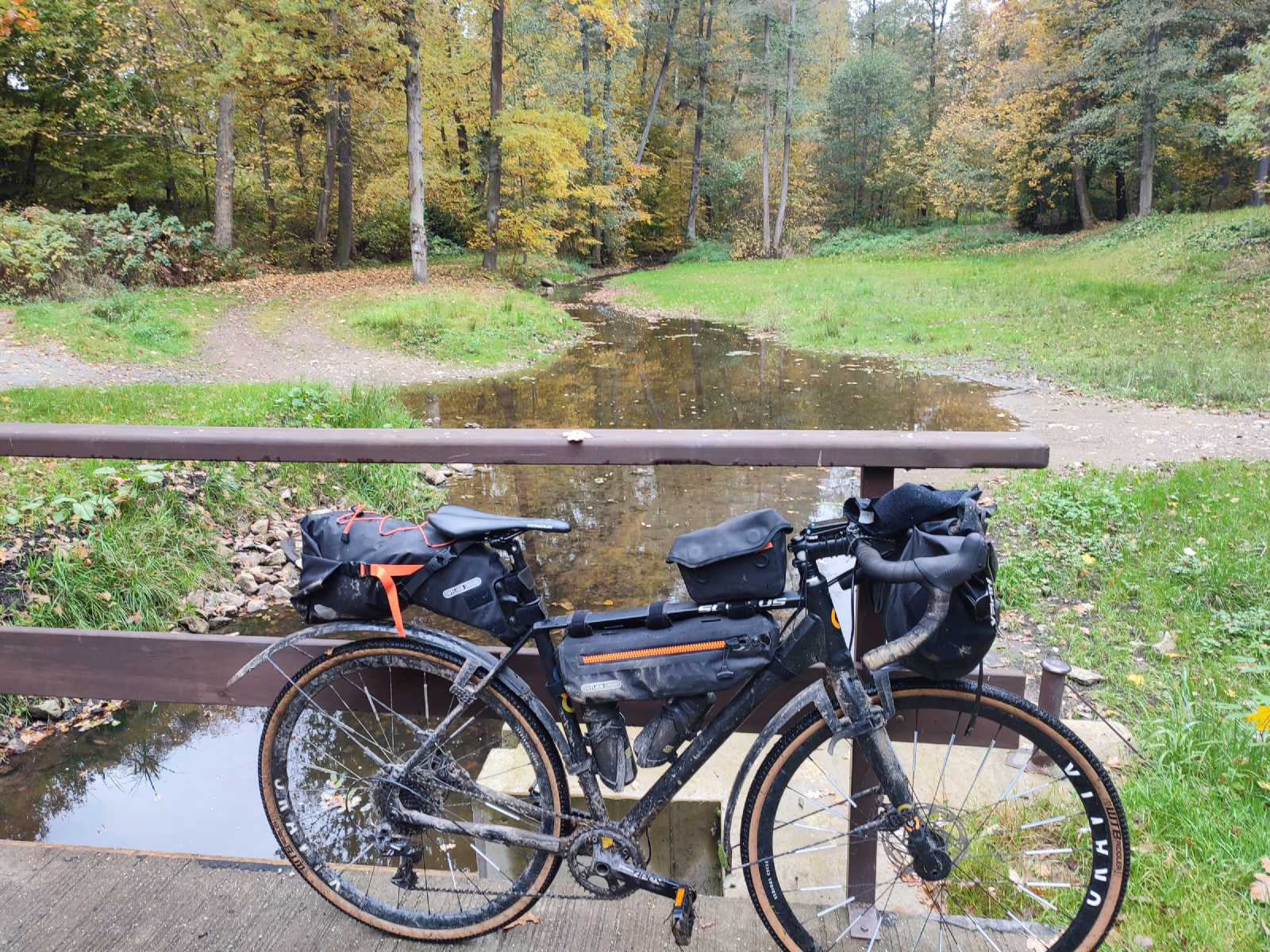
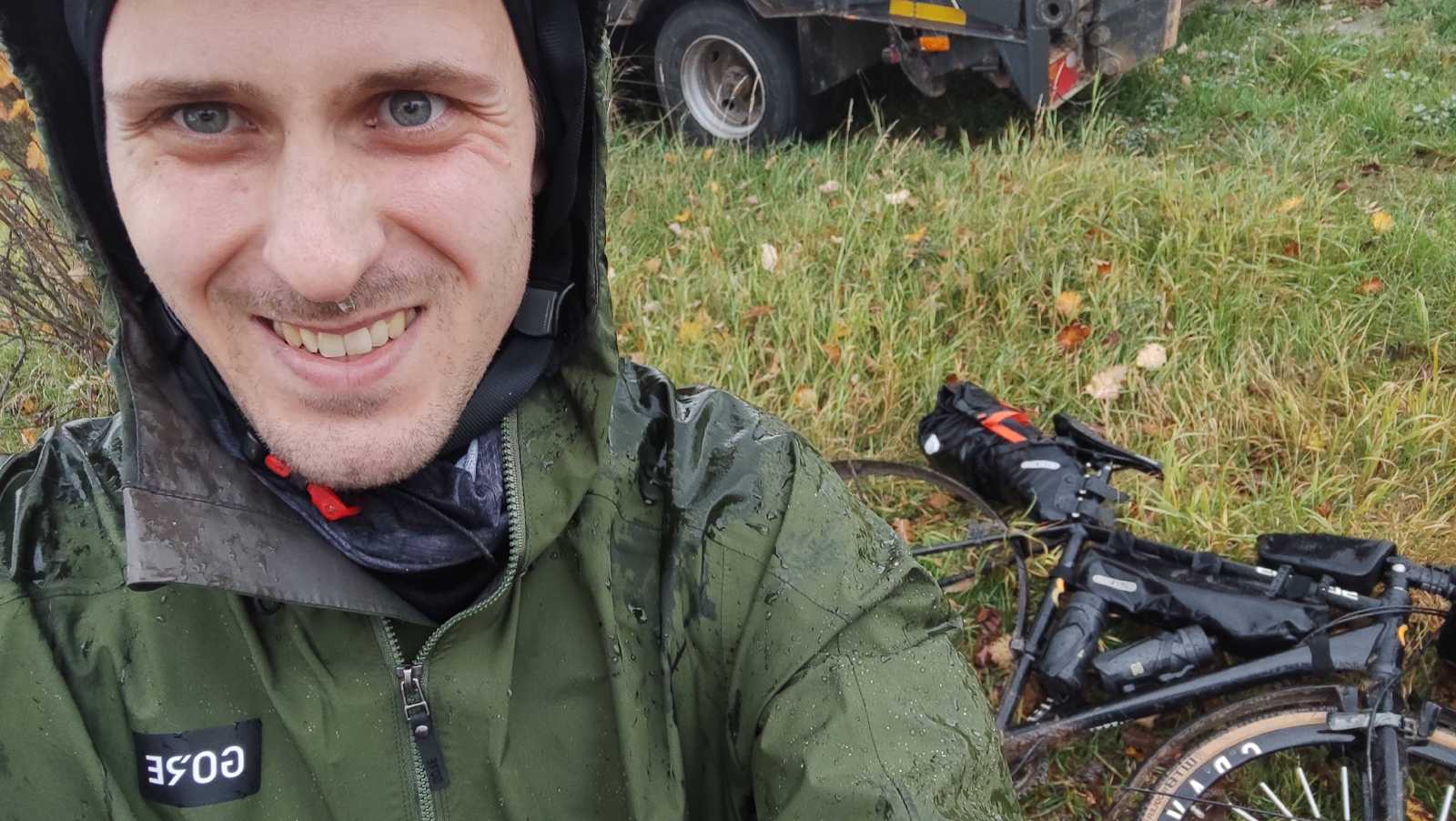
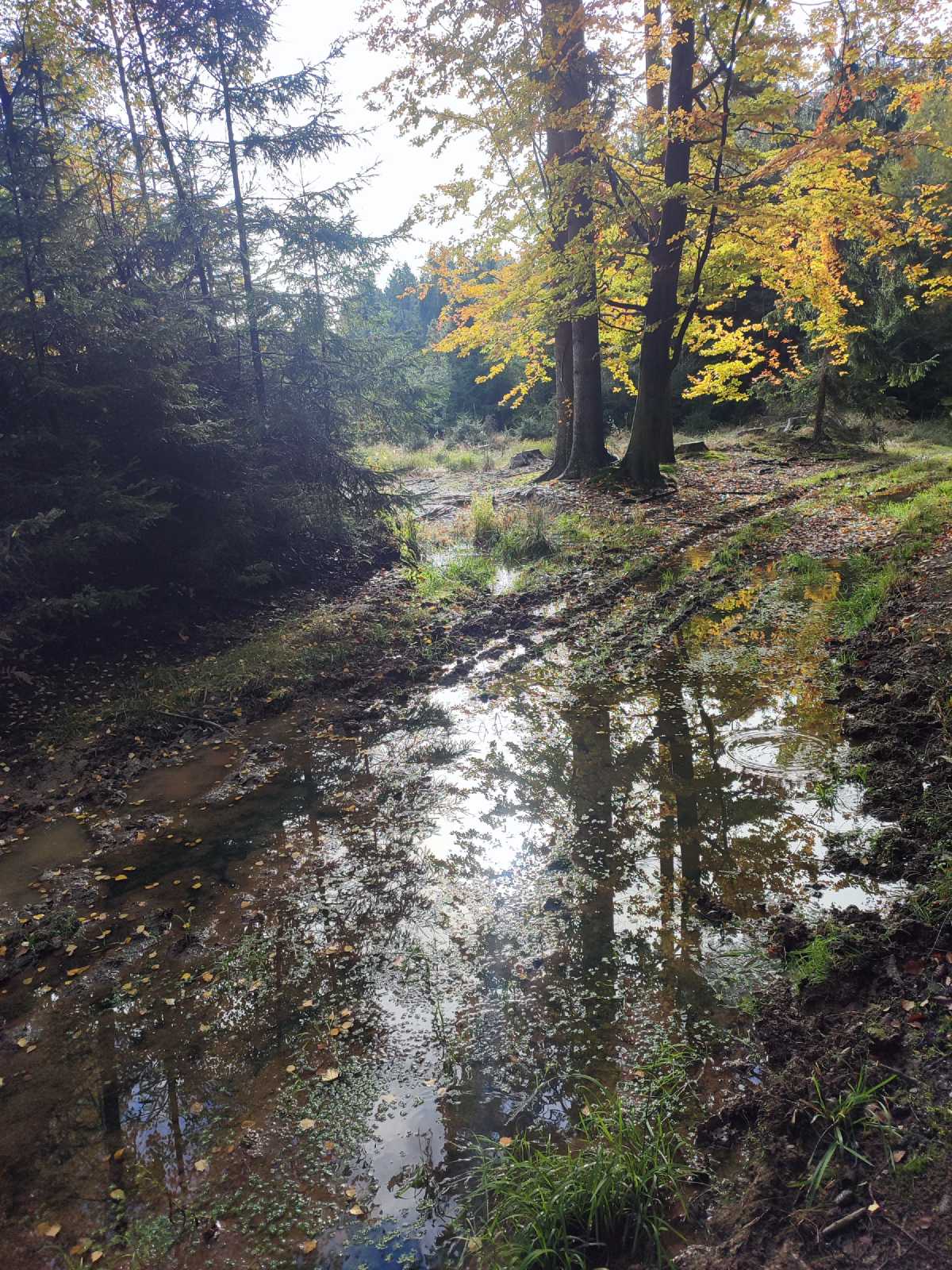
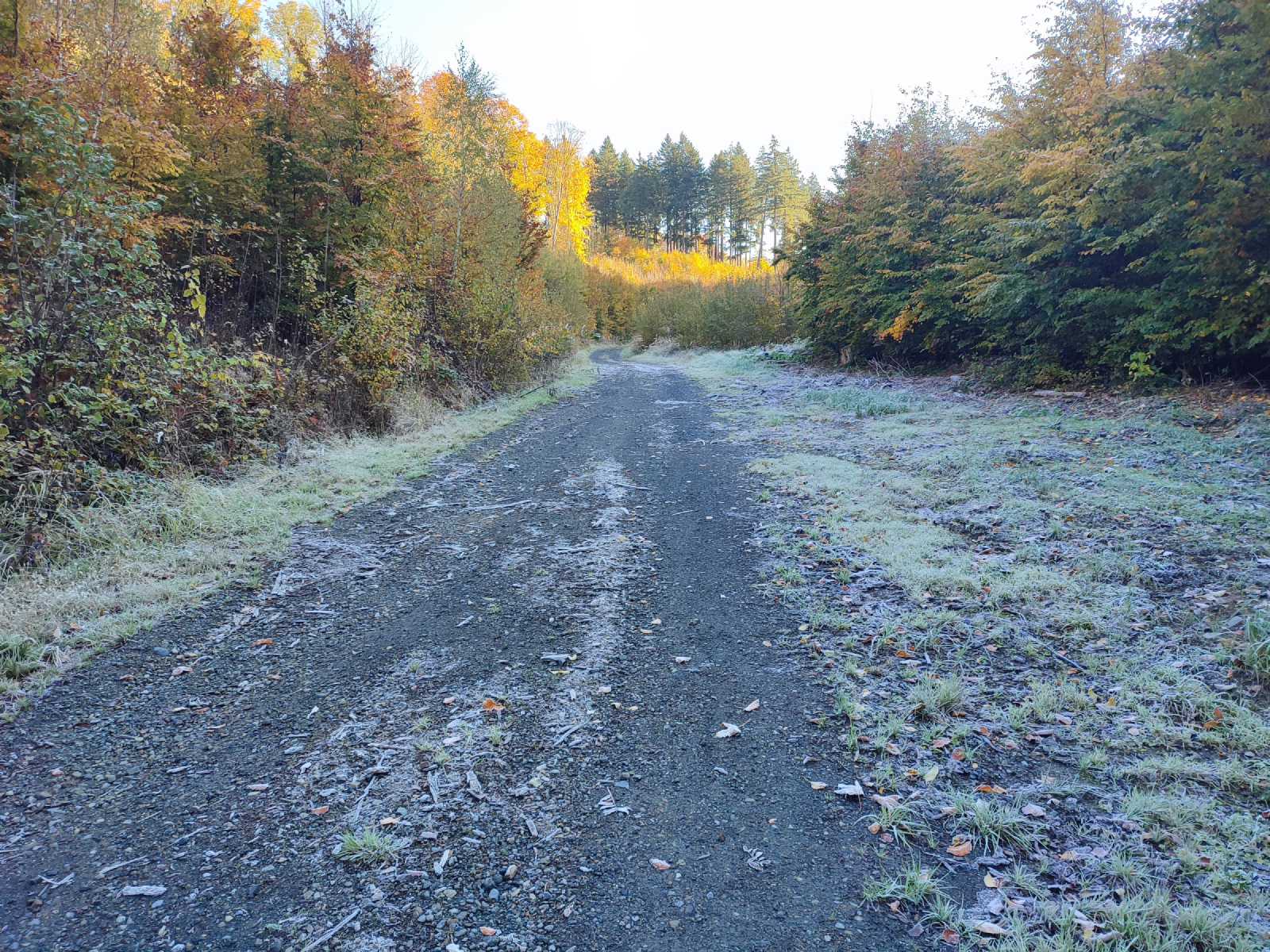
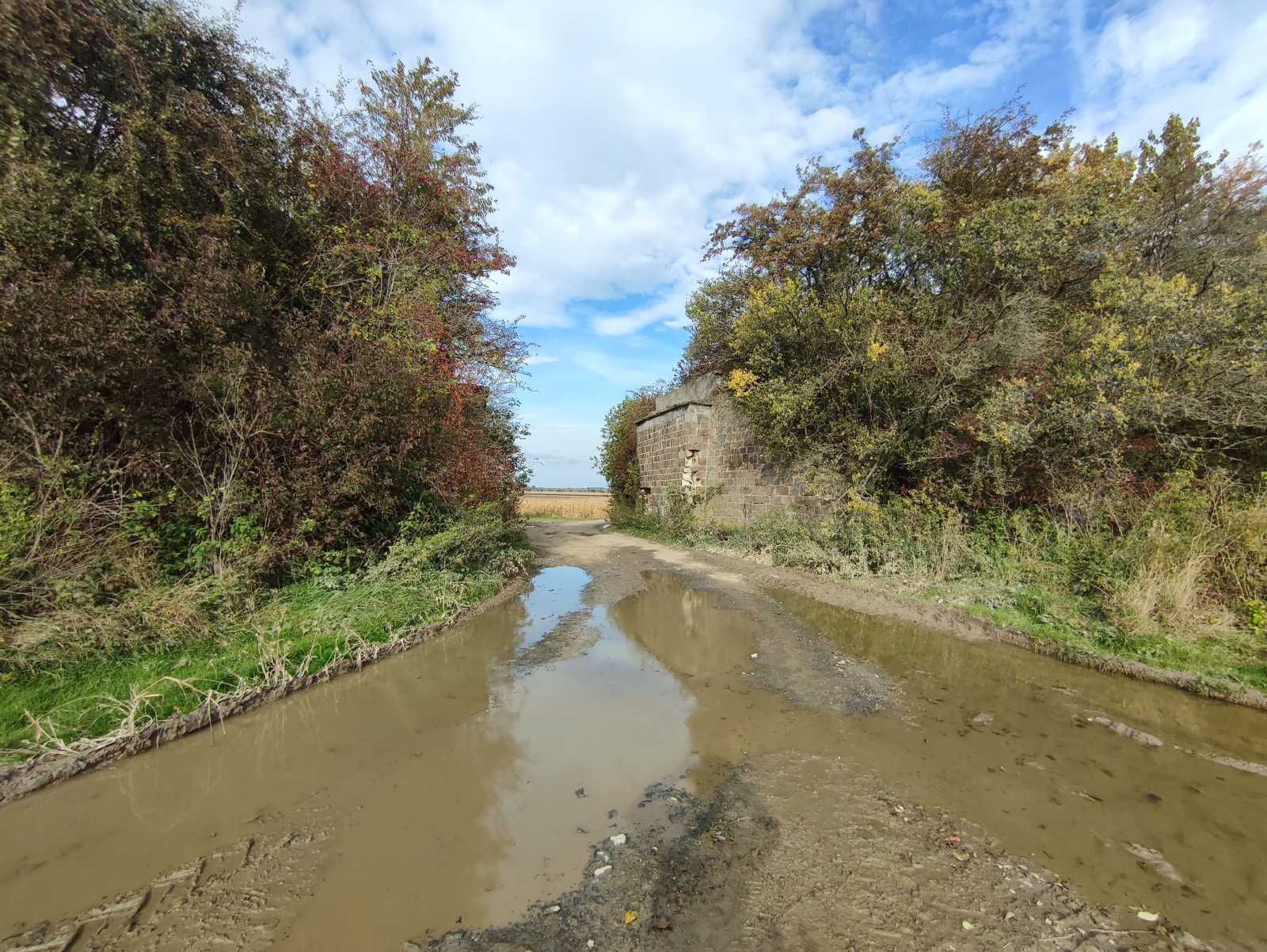
The Czech forest tracks, however, demanded respect. What looked like paths on the map often turned into obstacle courses: coarse gravel that rattled every bolt, deep furrows carved by harvesters and tractors, and puddles so massive that they deserved their own names. I dubbed the first one Lake Gambrinus 3. Some were inhabited by frogs and required using my bike as a walking frame to wade through. On particularly waterlogged sections, I’d prop myself against the handlebars like an improvised rollator. Practice for old age, I suppose 👵🏻.
Listening to Your Body
By the time I reached Brno, my Achilles tendon was getting thick. After internal debate, I made the wise decision to take the train for the next segment-from Brno to Lipník nad Bečvou via Olomouc. It was the right choice. The train ride through increasingly flat landscapes dotted with massive fields gave me time to rest, adjust my saddle position, and plan the final highlights: castle Moszna and explorations in Opava.
Sometimes the smartest part of an adventure is knowing when to ease off the pedals.
The Quest for Heřmánky
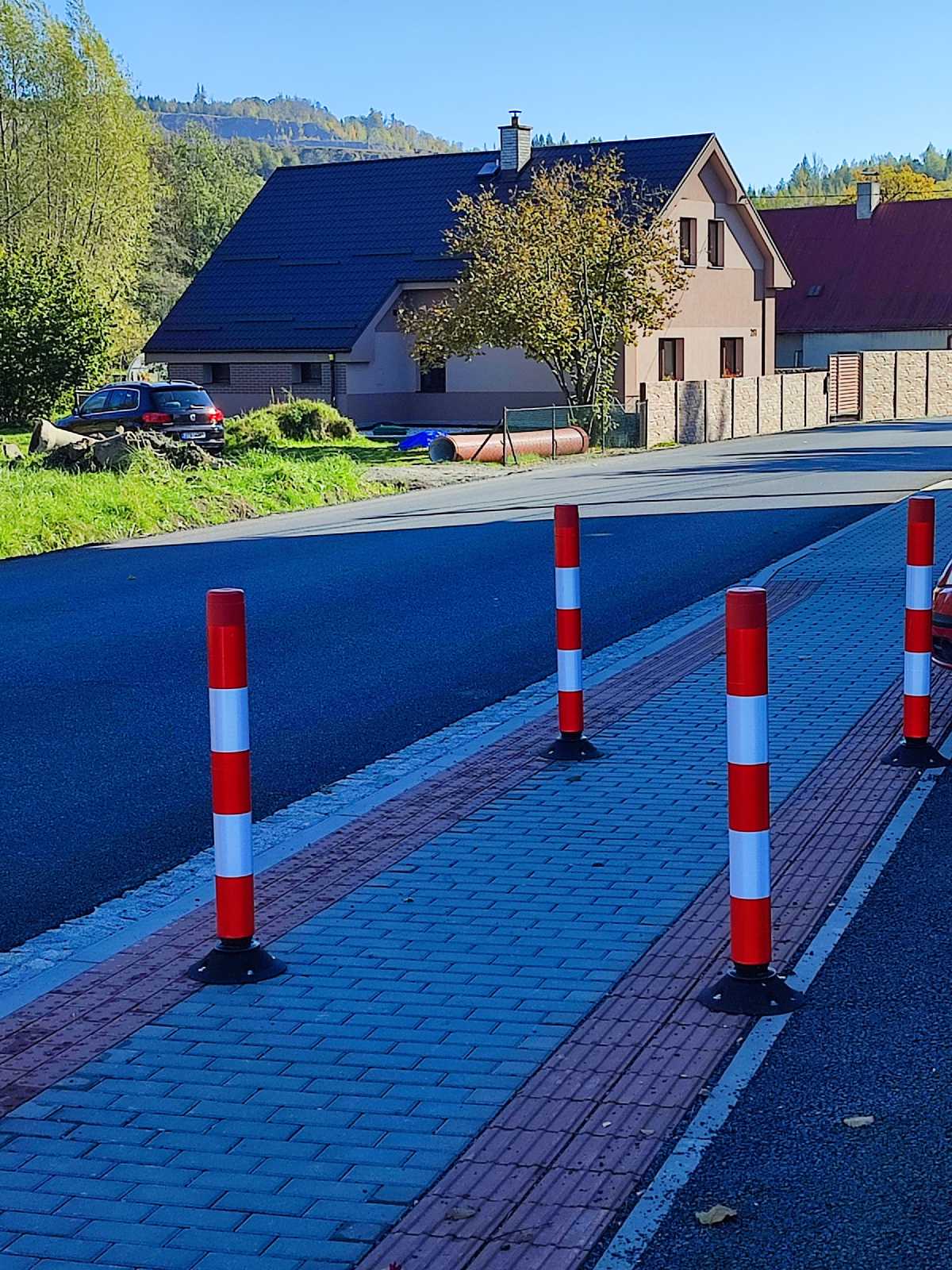
Finding my grandmother’s birthplace required detective work. The address on her 1930s birth certificate no longer corresponded to reality-numbering systems changed with shifting borders and rulers. At the listed house number stood only a barn. Using reference photos from the 1980s, I identified the house by its windows and chimney, cross-referencing with Streetview (see here) until I found it: Heřmánky 281. The building had changed considerably, but standing there, cycling up those same hills my great-grandparents must have climbed, created an unexpectedly profound connection.
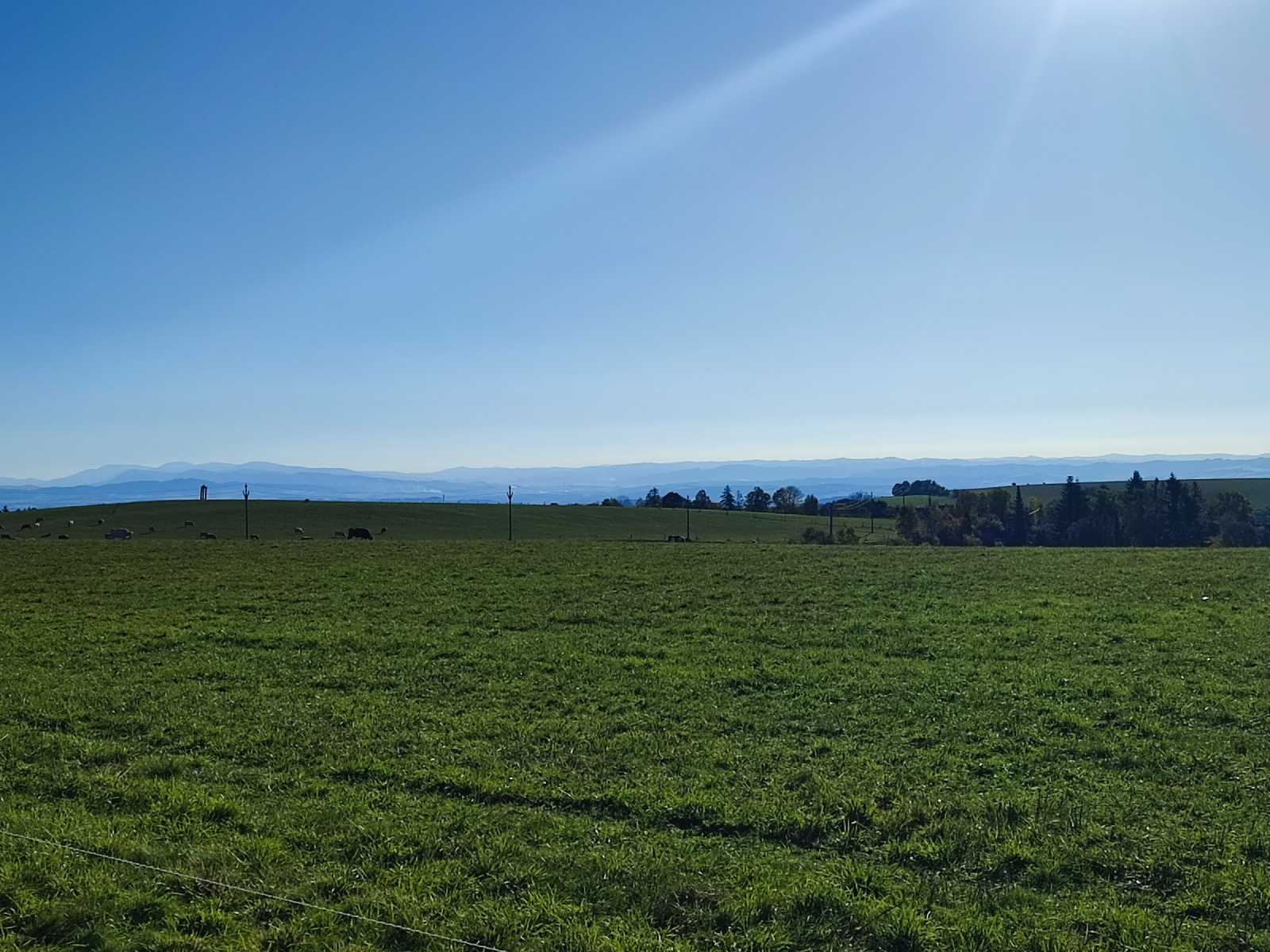
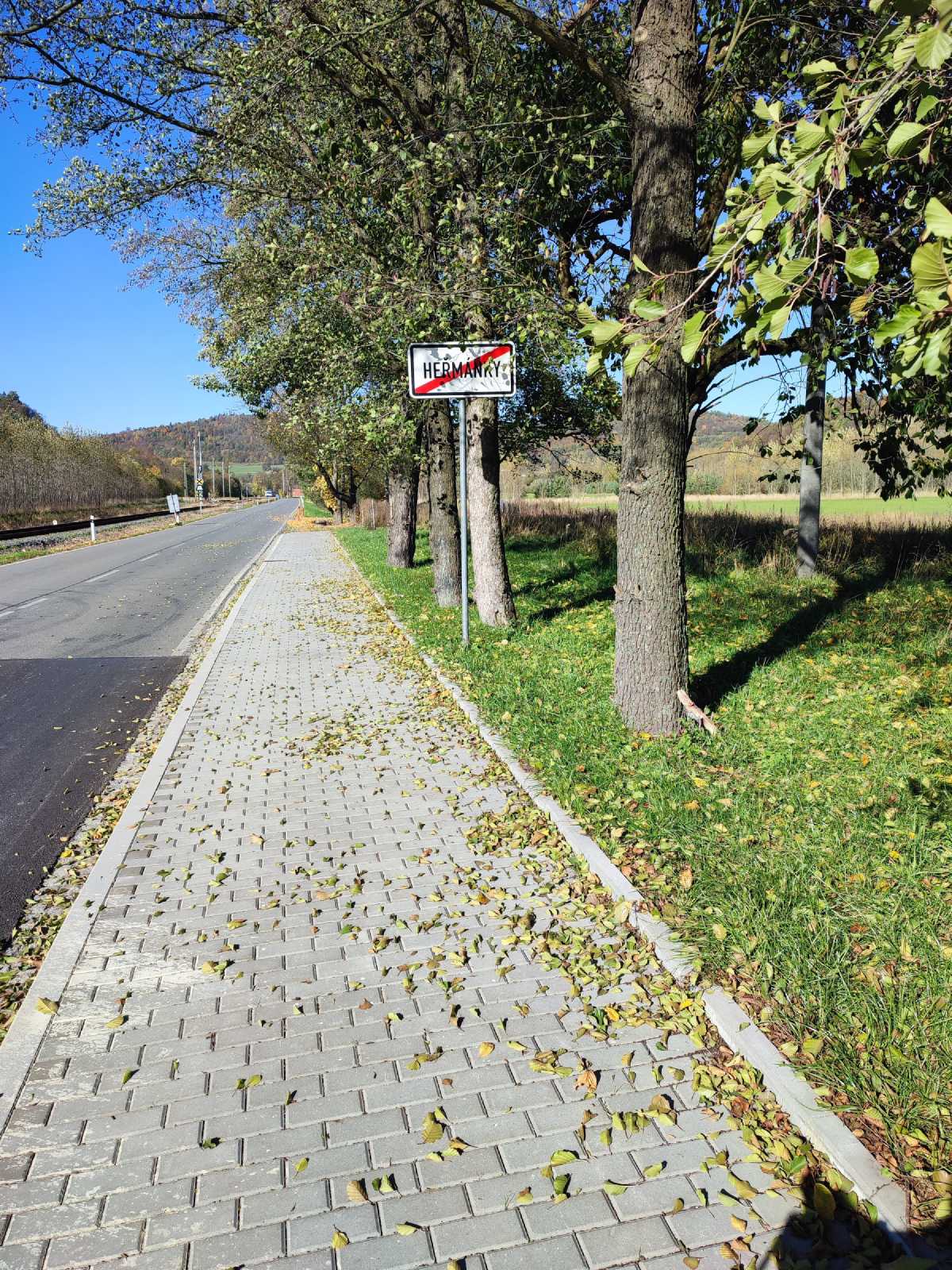
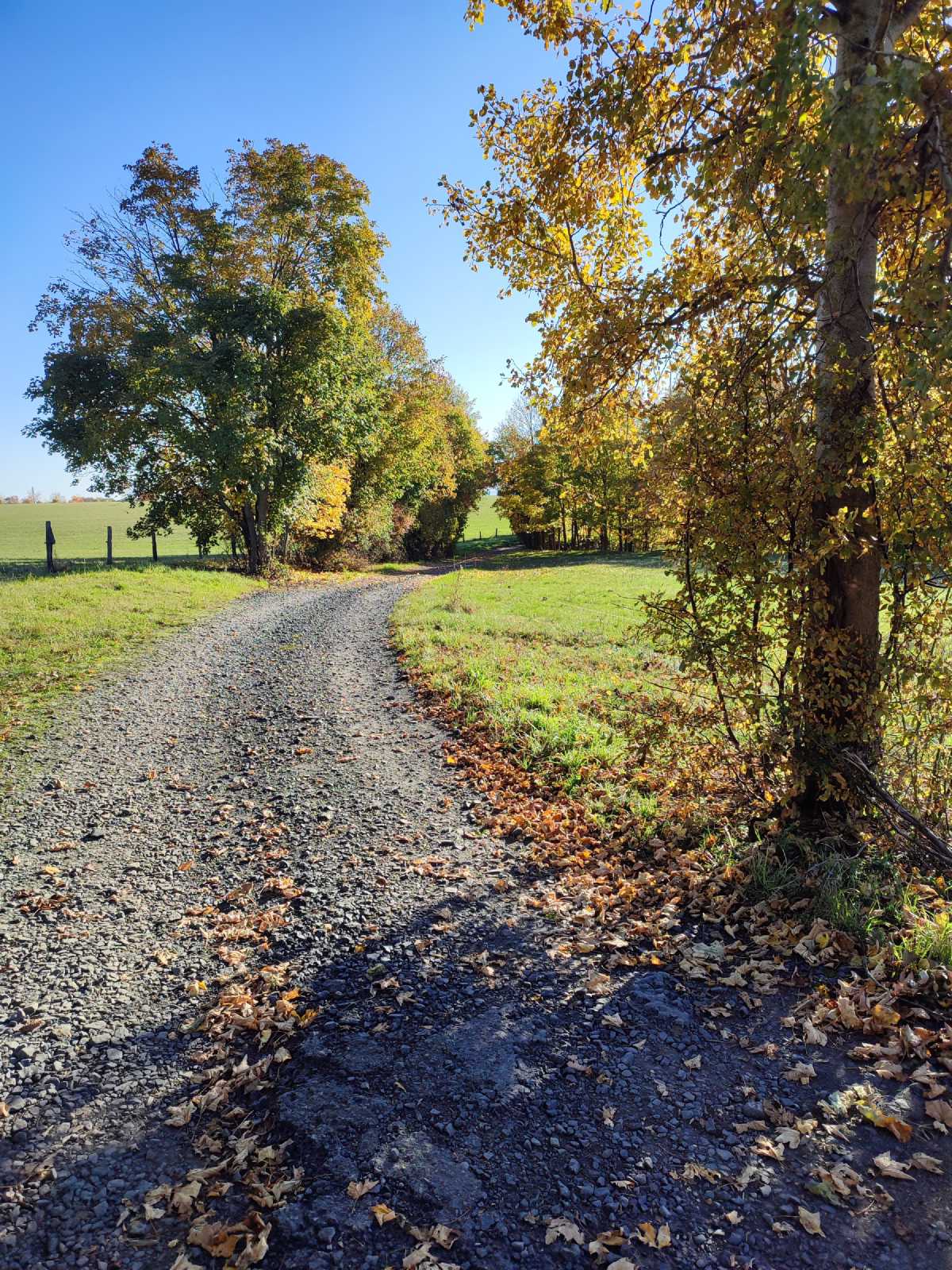
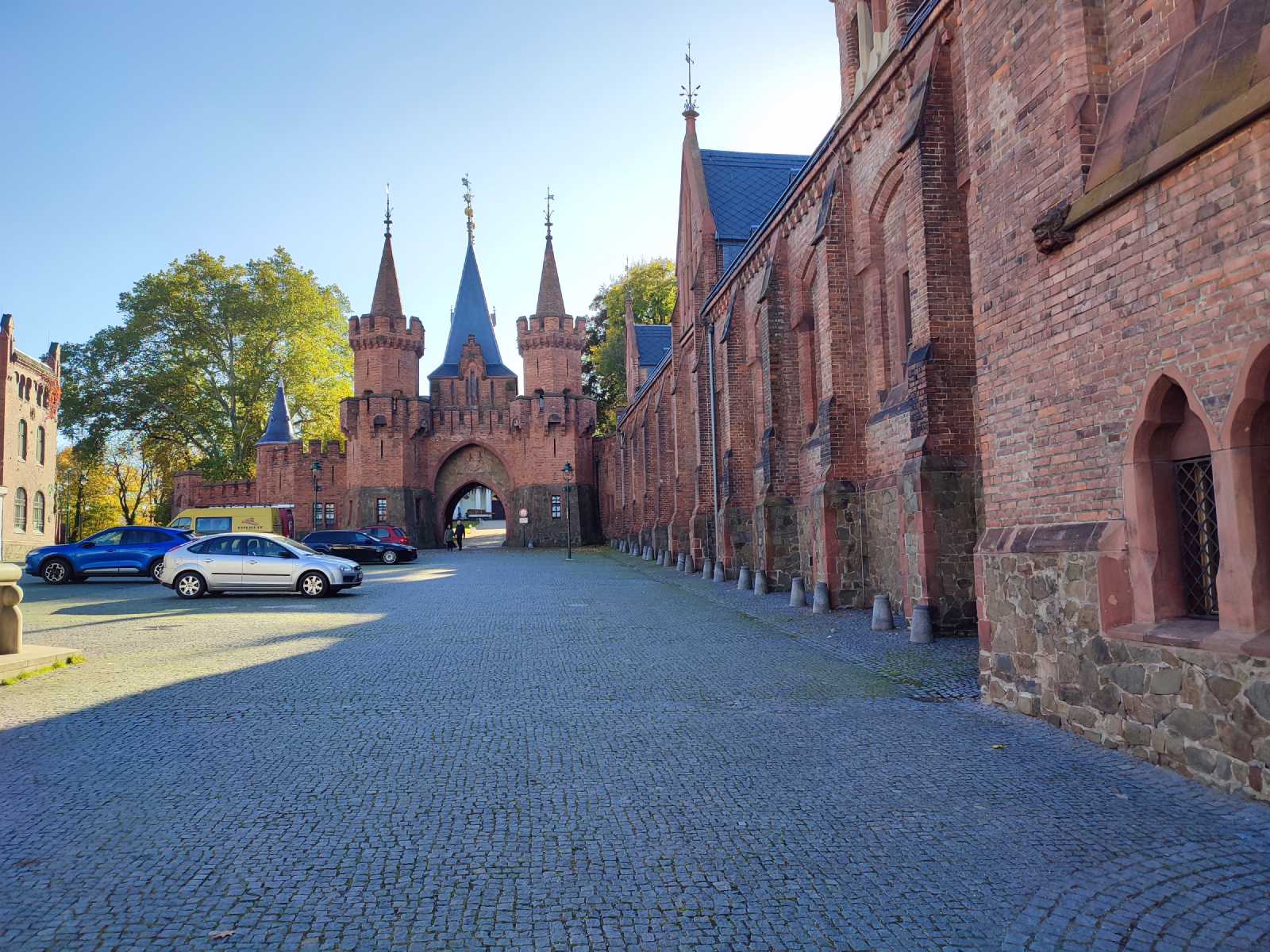
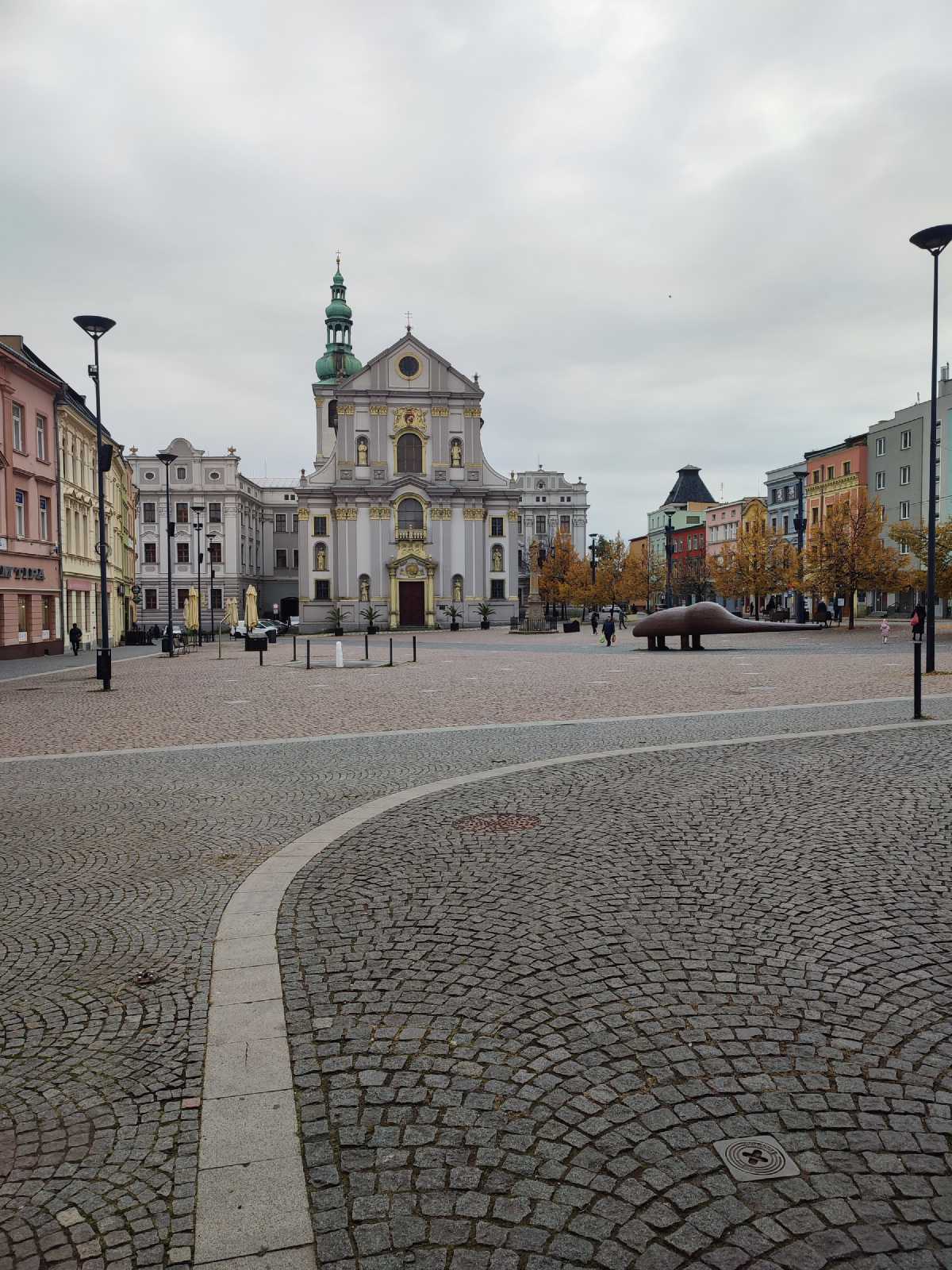
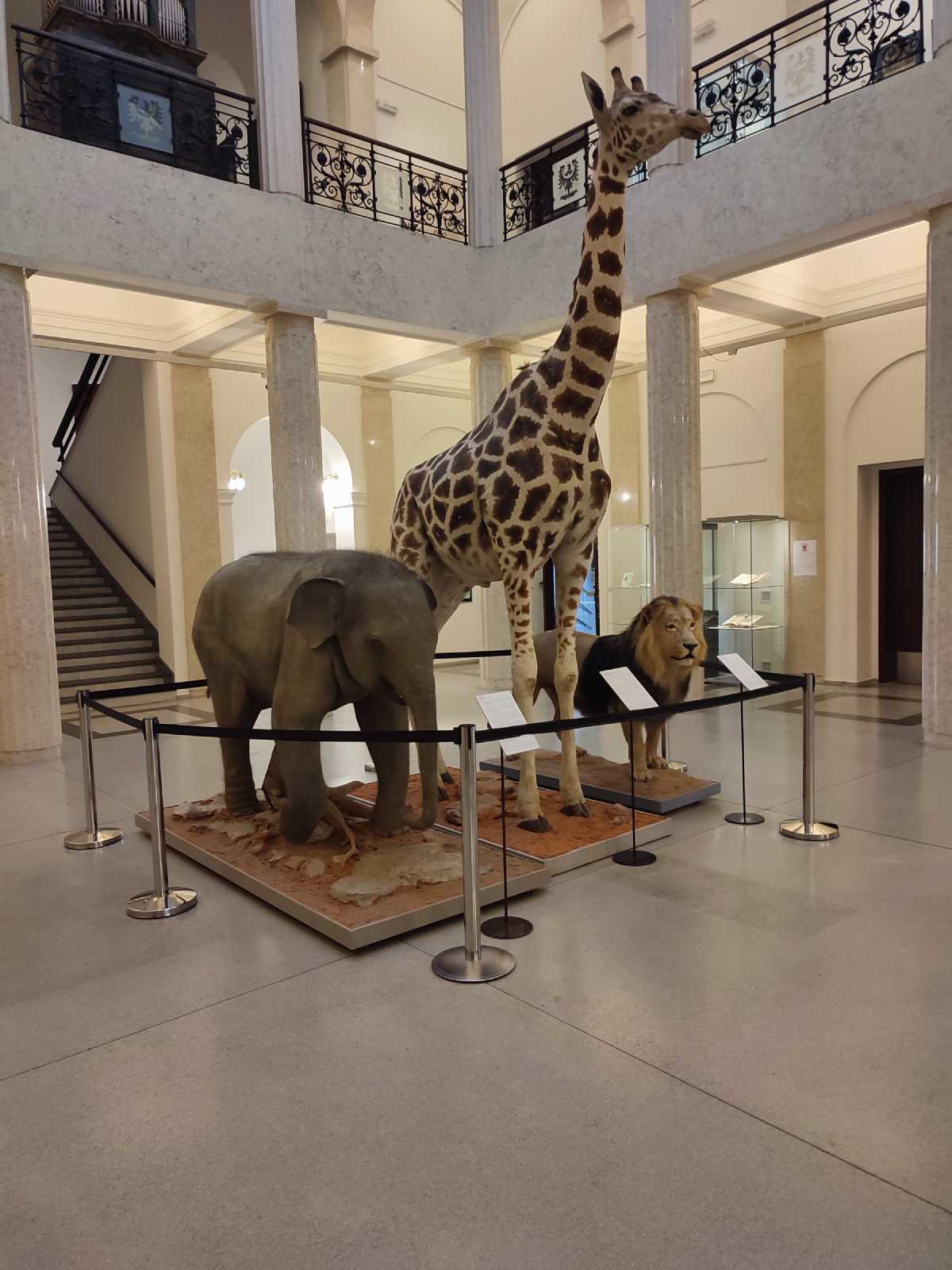
Heřmánky nad Odru (Ger. Kleinhermsdorf) sits nestled between hillsides through which the odru (Eng./Ger. Oder) flows-a typical Czech village with its mini market, train station, and playground. In summer, the region attracts day-trippers to restaurants serving soft ice, coffee, and some local specialities along the river path. I arrived in autumn as winter began knocking on the door. Small lakes showed surface ice, and the landscape wore a light dusting of sugar frost in the morning, warming to a pleasant 12°C by afternoon. I ended this segment in Opava (Ger. Troppau), where I also visited the Silesian museum and strolled around the old city centre.
The Polish Odyssey
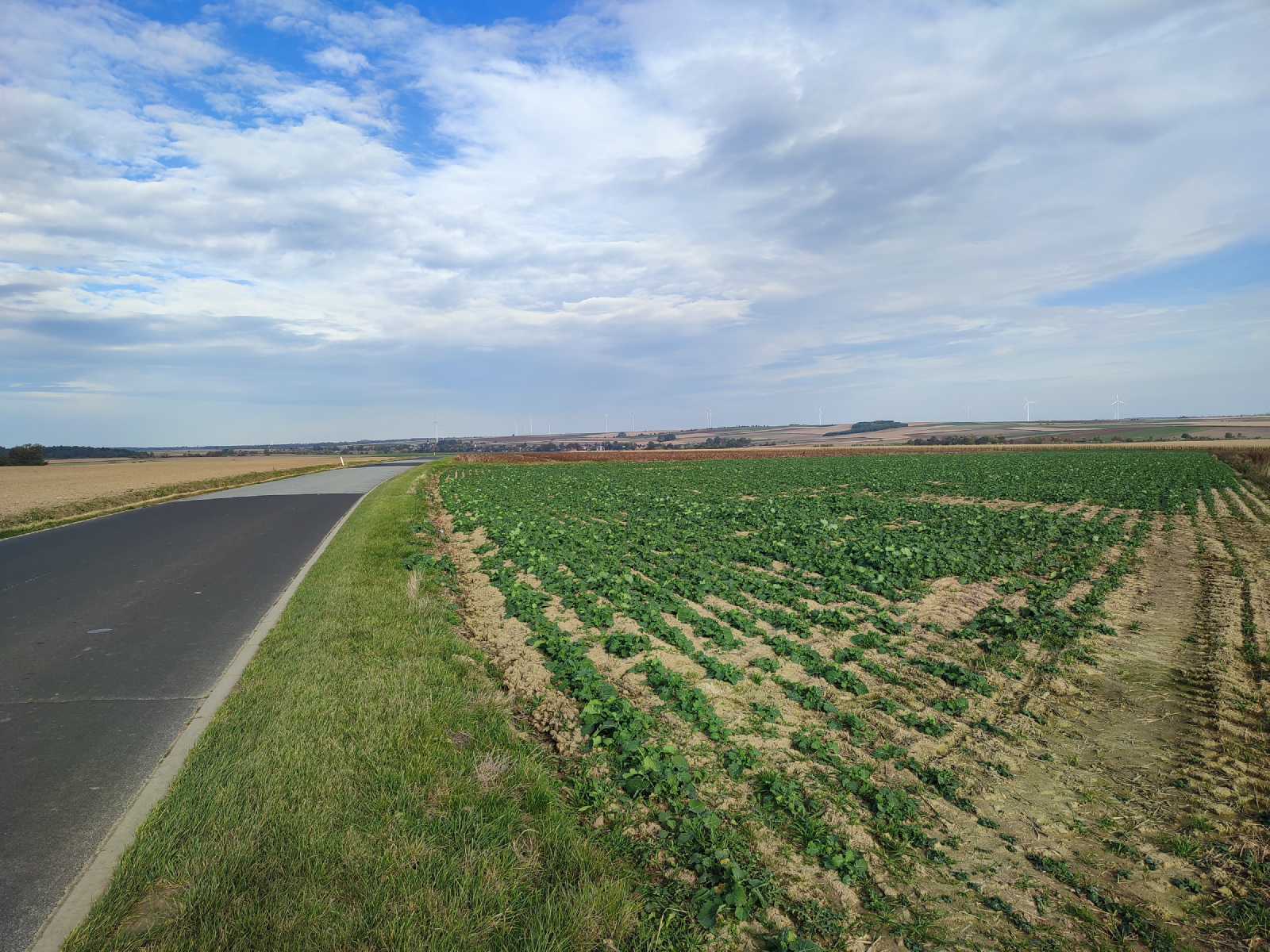
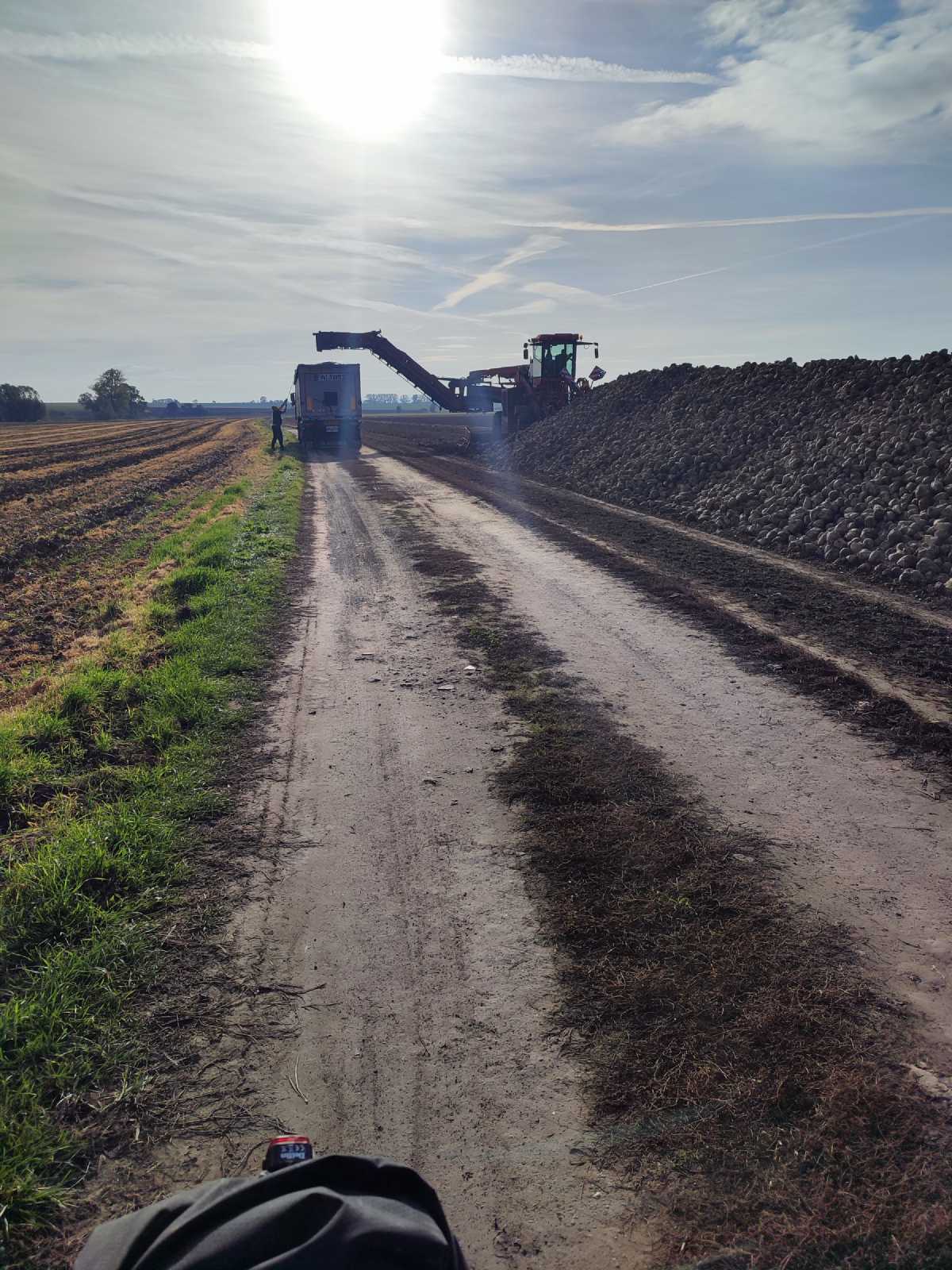
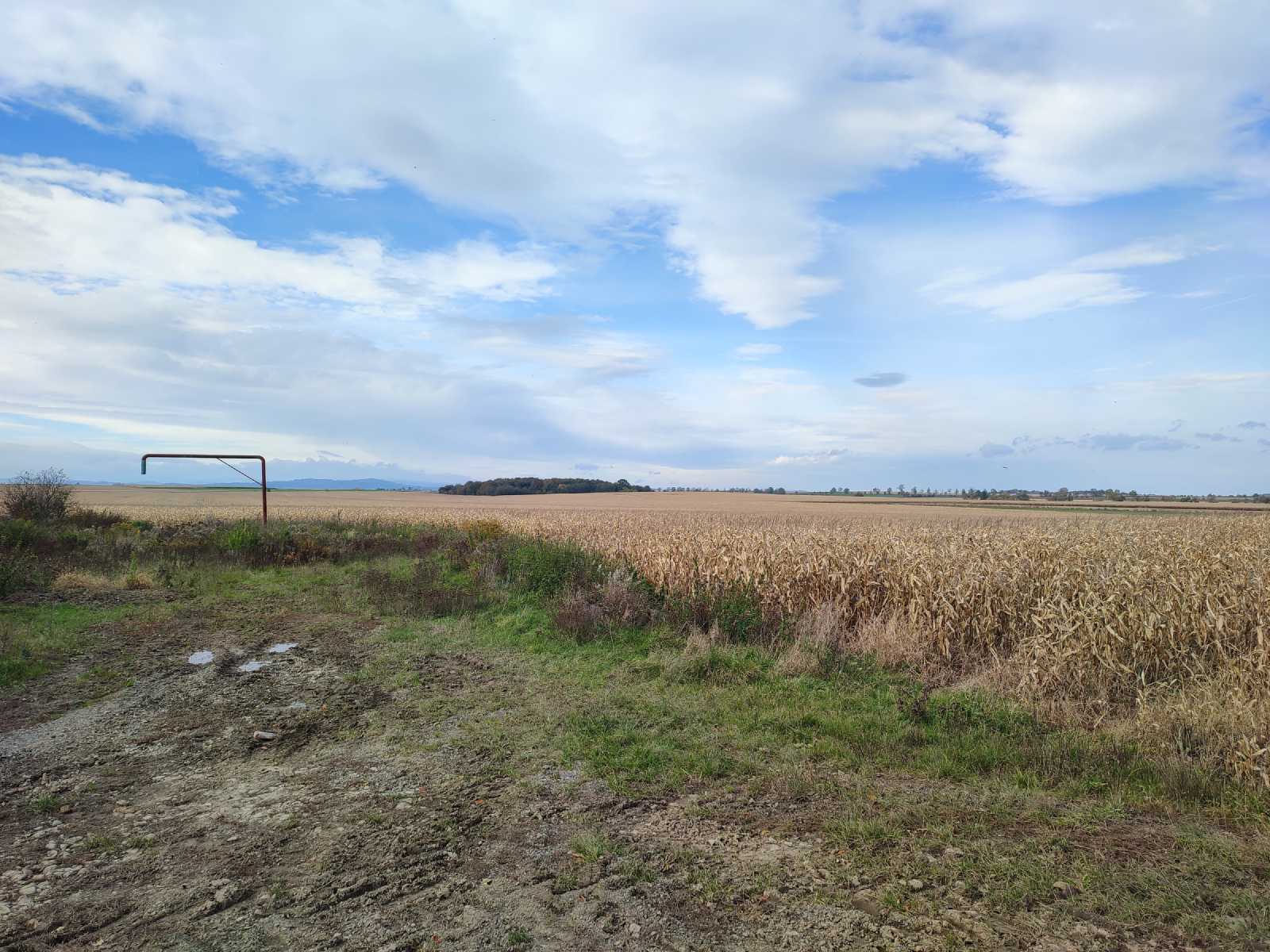
The landscape transformed into vast sugar beet and corn fields, harvested by correspondingly gigantic machines as I approached Poland. Polish villages had their own character—front gardens filled with kitsch like garden gnomes and angel figurines, village centers adorned with saint statues, and several Pope John Paul II monuments.
Wildlife sightings increased as I moved east: I’d seen around 30 partridges in the Czech fields, and for the first time in my life, spotted a pheasant in the wild just before Prószków (Ger. Proskau). The rather portly bird lumbered into flight ahead of me. 🐓
The final stretch to Opole through Poland tested everything I’d learned. Twenty-five kilometers from the castle Moszna, I suffered simultaneous front and rear punctures. Having exhausted my patch kit and with three purchased tubes already failed or damaged, I walked the remaining distance through rain and the acrid smell of manure that farmers spread before the storm. Nearly six hours on foot through field and forest paths.
In the woods, I met Simon and Piotr collecting mushrooms. These kind Polish souls had beer and morels in their baskets and advice for my future: “Get tubeless tires”, Simon said. He was right.
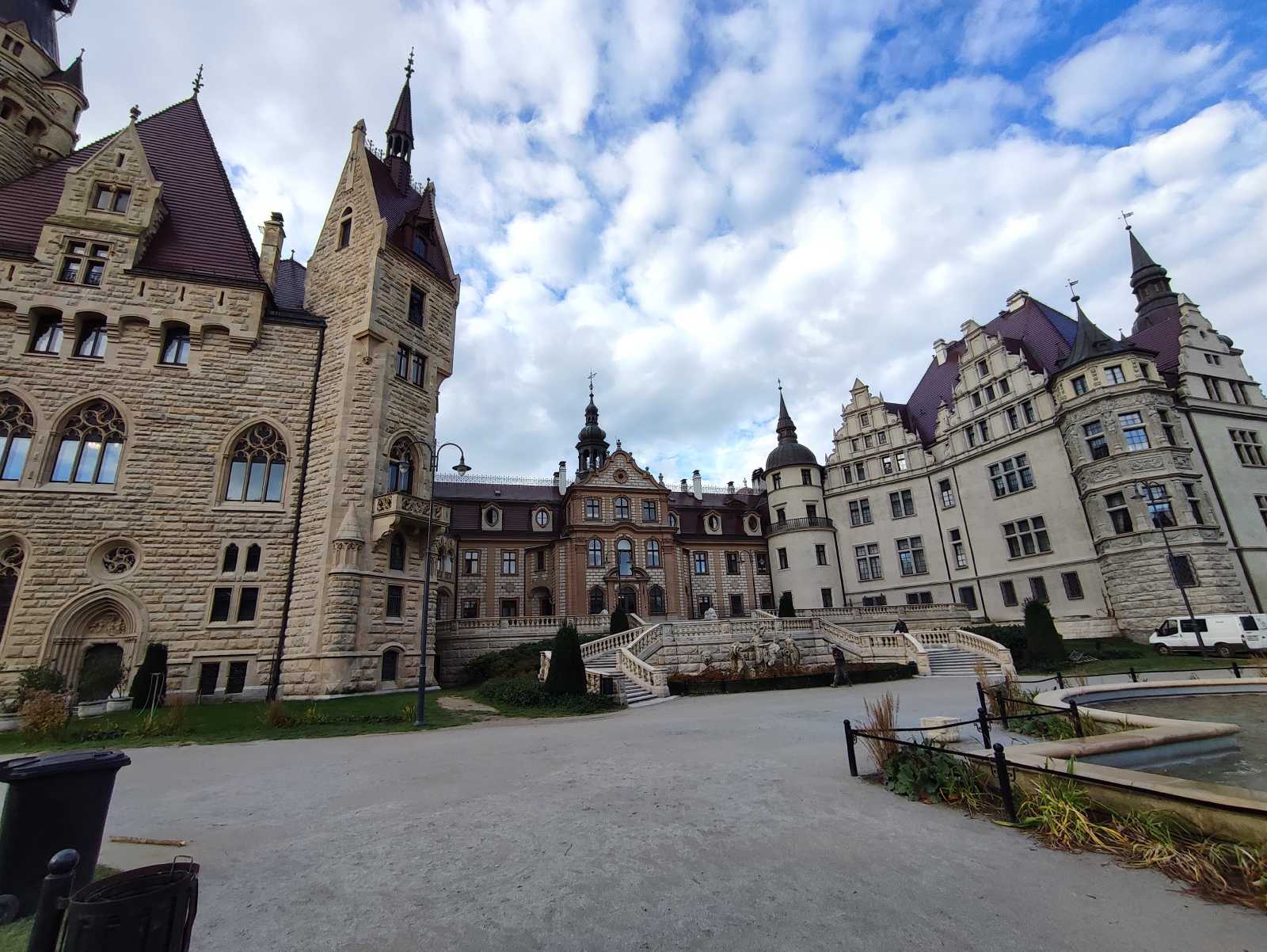
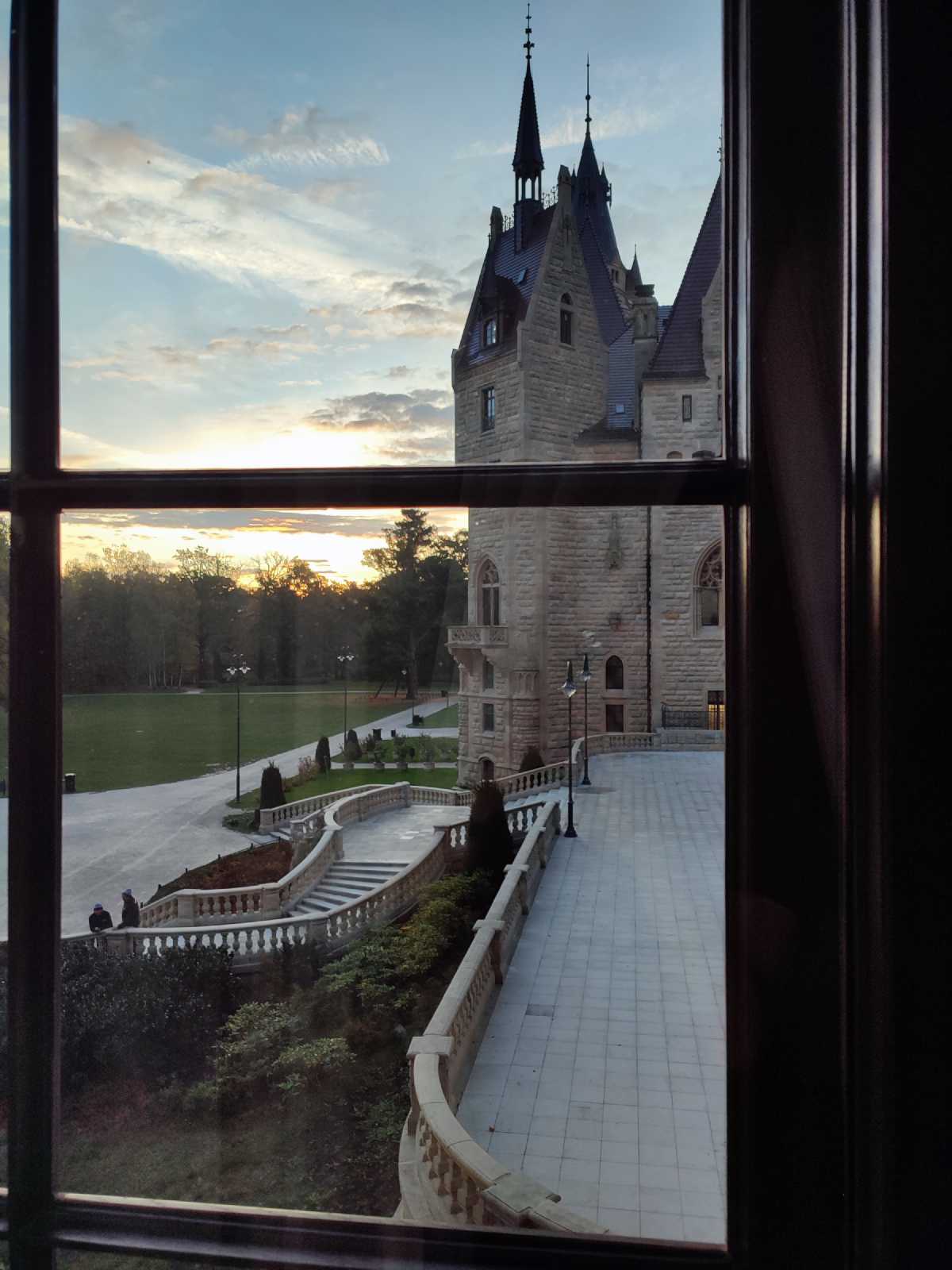
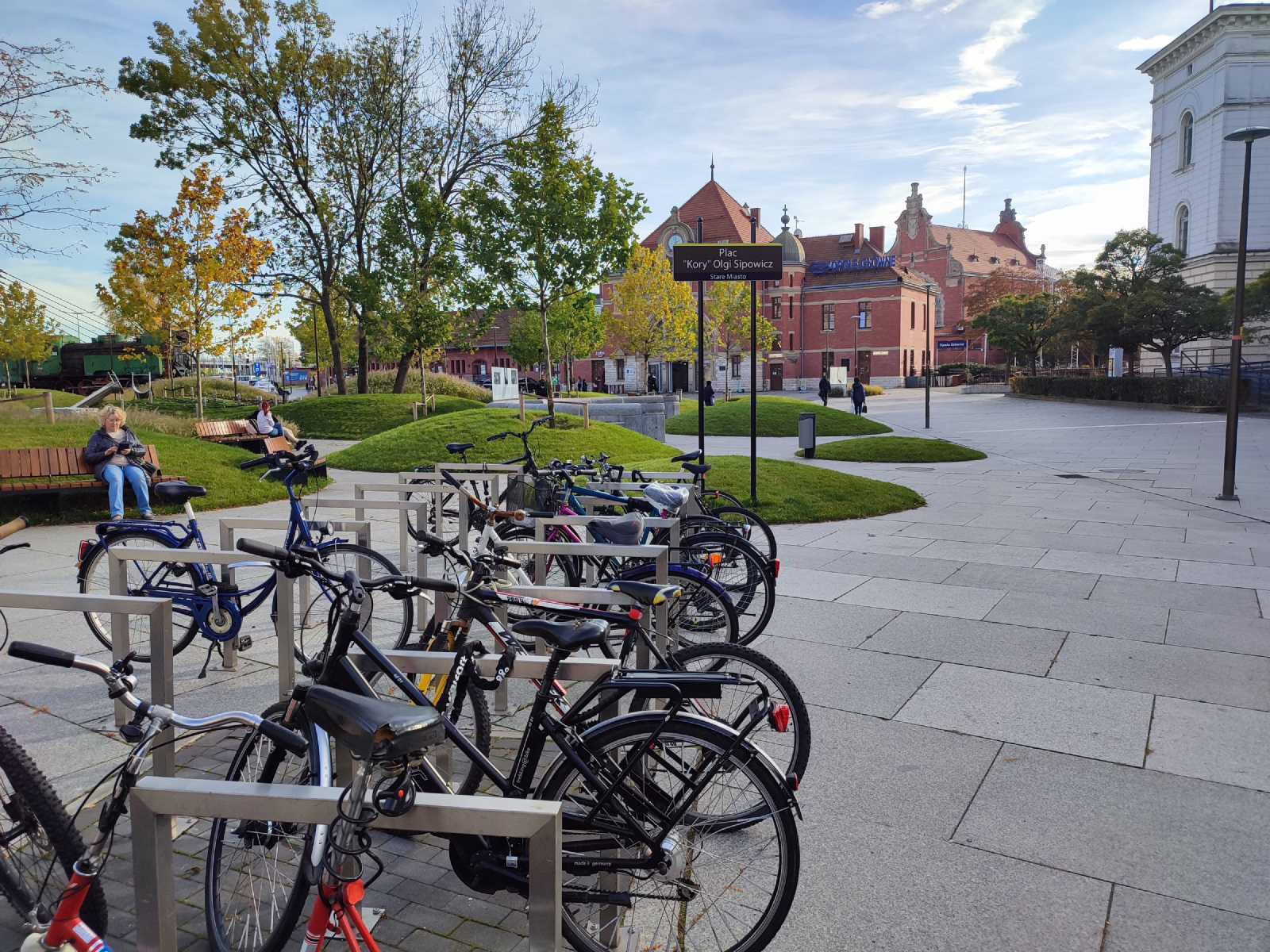
The technical team at castle Moszna came to my rescue the next morning, arranging transport to a bike shop and new tubes within an hour. The castle itself (and the breakfast 🤤) was also worth a stay. Thanks to marketing manager Veronika’s translations and the team’s help, I could complete the final 30 kilometers to Opole on proper Polish cycle paths. The reputation is true, they’re excellent.
Lessons from the Streets
This wasn’t just a bike tour; it was an free masterclass in resilience, problem-solving, and self-awareness. I learned that progress is progress, no matter how small. On long stretches, I motivated myself by celebrating every 10 kilometers or round number - at 50 km, imagining it’s just 1.5 hours in a gym; at 14 km, thinking it’s twice my commute to work. Altogether I rode 1,160 km with 14,181 m in elevation.
As I pushed further, I wondered what lessons translate to daily life. I’ve achieved more than I seriously thought possible. Perhaps in my daily life, I’m my own highest mountain and should seek more adventures there too.
But more importantly, it showed me I often rush. I’m a person who can’t sit long at breakfast or in restaurants, always needing to progress on the route. I want to savor the moments more in the future.🙇
The journey taught me practical wisdom: you can never have enough spare tubes. Amen.
Coming Home
From Opole I took a Flixbus back to Karlsruhe. The connection is direct, takes bikes 4, and runs through the breathtaking Giant Mountains. I plan to come back to the Giant Mountains for a new adventure. What’s going to be your next adventure?
I hadn’t known the exact address at the beginning of the trip, as I only new the address from my grandma’s birth certificate from the early 30s. Read more about this in a later section. ↩︎
Reddit got you covered. Here is a nice discussion about how bike packing and bike touring is different. ↩︎
Gambrinus is the patron saint of beer making. See here for an interesting read. ↩︎
Not all flixbuses are created equal. Some take bikes, but some don’t (see here.). You can check the availability by adding your bike as a passenger. Sometimes bikes are loaded into the trunk. Mine was put on a bike stand and I was assisted with mounting and unloading. I placed my saddle and snack bag into to trunk and brought my handle bar bag onto the bus as hand luggage. ↩︎